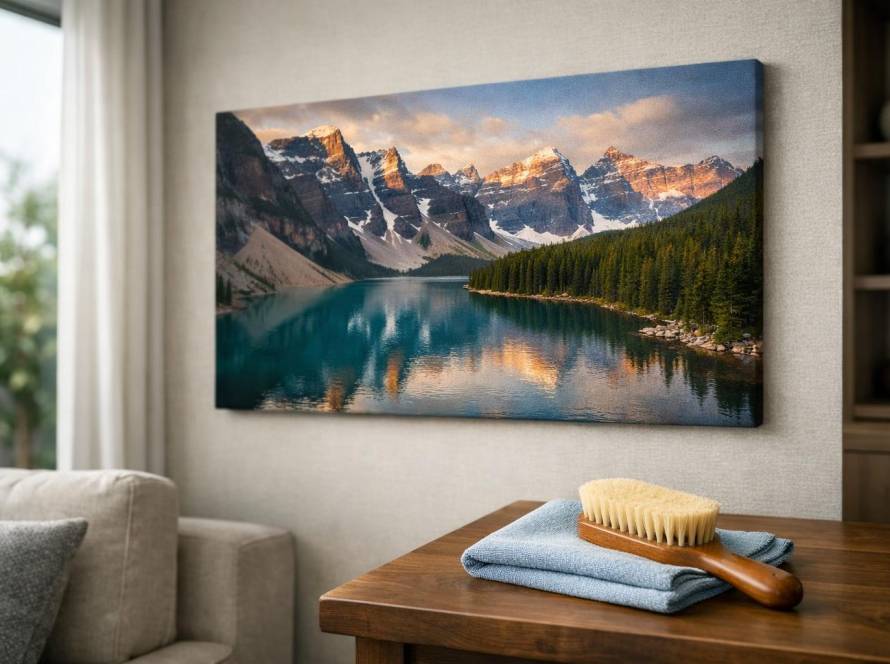
Whether you’re sending a canvas print to a friend across Singapore or delivering an order to a client in another district, the last thing you want is for the artwork to arrive damaged. Canvas prints are more durable than paper posters, but they still need proper protection against bumps, moisture, and pressure. This guide covers practical packing methods, material choices, and courier considerations to help your canvas prints reach their destination in good condition.
Assessing Risk: Size, Fragility, and Regional Climate
Before you start packing, evaluate the specific risks your canvas print will face. The three main factors are size, fragility, and the environment it will travel through.
Size and weight matter because larger canvases are more likely to bend or flex during handling. A 60cm x 90cm canvas can be packed relatively easily, but a 120cm x 180cm piece requires more rigid support. Heavier frames also increase the risk of impact damage if dropped.
Fragility depends on the type of canvas. A gallery-wrapped canvas with a wooden frame is more vulnerable at the corners and edges. A rolled canvas (without a frame) is more flexible but can be crushed if something heavy is placed on top. Consider the weakest points: corners, edges, and any protruding hardware.
Regional climate is a real concern in Singapore. High humidity and sudden rain showers can cause moisture damage, especially if the packaging is not sealed properly. Even if you’re shipping within Singapore, a courier van might be parked in the sun or caught in a downpour. Always use moisture-resistant materials and avoid leaving packages exposed to the elements.
Materials Checklist: Corner Protectors, Bubble Wrap, and Crates
Having the right materials on hand makes packing easier and safer. Here’s a checklist of what you’ll need:
- Corner protectors – rigid plastic or cardboard corners that fit over the frame edges. These are essential for framed canvases.
- Bubble wrap – use at least two layers for cushioning. Choose a roll with larger bubbles for better shock absorption.
- Kraft paper or tissue paper – wrap the canvas first to prevent bubble wrap from leaving marks on the surface.
- Cardboard sheets or foam board – for flat packing, these provide rigid support on both sides.
- Packing tape – use strong, wide tape. Avoid masking tape or duct tape, which can leave residue.
- Plastic bags or shrink wrap – to protect against moisture. A simple clear plastic bag can work if sealed properly.
- Corrugated cardboard box – choose a box that is slightly larger than the canvas, leaving room for cushioning.
- Wooden crate (for very large canvases) – if the canvas is over 120cm on any side, a wooden crate provides the best protection.
You can find most of these materials at art supply stores, packaging suppliers, or online. For a one-off shipment, you might reuse a sturdy box from a previous delivery, but make sure it’s clean and free of holes.
Roll vs Flat Shipping: When to Roll Canvases and When Not To
One of the first decisions is whether to ship the canvas rolled or flat. Each method has its pros and cons.
Rolled shipping
Rolling a canvas is common for unframed prints. It reduces the package size and can be cheaper to ship. However, rolling is only safe if the canvas is flexible and has no frame. If you roll a canvas, do it with the print side facing outward to avoid cracking the ink. Use a sturdy cardboard tube with a diameter of at least 10cm to prevent creasing. Wrap the canvas in acid-free paper first, then roll it around the tube, and secure it with tape. Add extra padding at the ends of the tube.
When not to roll: If the canvas is already stretched on a frame, do not roll it. Rolling a framed canvas will damage the frame and may cause the canvas to tear. Also, if the canvas has a textured finish or is very thick, rolling can cause permanent creases.
Flat shipping
Flat shipping is the safest method for most canvas prints, especially those with frames. Place the canvas between two rigid sheets of cardboard or foam board, then wrap the whole package in bubble wrap. Use corner protectors on the frame edges. This method keeps the canvas flat and prevents bending.
For very large canvases, flat shipping may require a custom box or crate. The cost is higher, but the protection is worth it for valuable pieces.
Securing Frames and Gallery Wraps for Transport
Framed canvases and gallery wraps need extra attention because the frame is the most vulnerable part. Here’s how to secure them:
- Add corner protectors – these fit over the corners of the frame and absorb impact. You can buy them or make your own from cardboard.
- Wrap the frame separately – if the frame has any protruding parts (like a hanging wire), wrap them with bubble wrap to prevent snagging.
- Use a double-box method – place the wrapped canvas in a box, then put that box inside a larger box with packing peanuts or crumpled paper in between. This creates a buffer zone.
- Reinforce the box seams – tape all seams of the box, not just the top and bottom. Use a “H” taping pattern on the top and bottom for extra strength.
- Label the package as “Fragile” – this alerts handlers to be careful, though it’s not a guarantee.
If you’re shipping a gallery wrap without a frame, the same principles apply. The wooden stretcher bars are the weak points, so protect the corners and edges.
Labeling and Documentation: Fragile, Orientation, and Handling Notes
Proper labeling helps couriers handle your package correctly. Here’s what to include:
- “Fragile” – write this clearly on at least two sides of the box. Use a permanent marker or printed labels.
- “This Side Up” – if the canvas must stay flat, add orientation arrows. This is especially important for framed canvases.
- “Do Not Stack” – if the package is heavy or rigid, this note can prevent other boxes from being placed on top.
- Handling notes – for example, “Keep Dry” or “Do Not Bend”.
- Sender and recipient details – include full names, addresses, and phone numbers. Also, add a return address in case delivery fails.
For documentation, you don’t need a commercial invoice for domestic shipments within Singapore. However, if you’re shipping to another country, you’ll need a commercial invoice and possibly a certificate of origin. For local deliveries, a simple packing slip is enough.
Recommended Courier Classes and Insurance Options in Singapore
Singapore has several courier options, from same-day delivery to economy services. The right choice depends on your budget and how quickly you need the item delivered.
- Same-day courier – ideal for urgent deliveries within Singapore. These services are faster but cost more. They are also more likely to handle packages with care because they are dedicated to your delivery.
- Standard courier (1-2 days) – most courier companies offer this. It’s a good balance of cost and speed. Choose a service that includes tracking.
- Economy courier (2-4 days) – cheaper but slower. This is fine for non-urgent shipments, but the package may be handled more roughly.
For insurance, check if the courier includes basic coverage. Many offer additional insurance for a small fee. If your canvas is valuable, it’s worth paying for extra coverage. Keep a record of the item’s value and photos of the packed item in case you need to file a claim.
When choosing a courier, consider their reputation for handling fragile items. Some couriers have special services for artwork. You can also use a logistics company that specialises in art shipping, but that may be overkill for a single canvas.
On-Arrival Checks: What Recipients Should Inspect Immediately
Once the package arrives, the recipient should inspect it right away. Here’s a checklist:
- Check the outer box – look for dents, punctures, or water stains. Take photos if there is visible damage.
- Open the box carefully – use a box cutter, but be careful not to cut the canvas inside.
- Inspect the canvas – look for creases, tears, or scratches. Check the corners and edges of the frame.
- Check for moisture – feel the canvas and packaging for dampness. If it feels wet, there may be water damage.
- Test the frame – if it’s a framed canvas, make sure the frame is not warped or broken.
- Report damage immediately – if there is damage, contact the courier and the sender within 24 hours. Most couriers have a claim window.
If the canvas is rolled, unroll it and lay it flat for a few hours to let it settle. Check for any creases that might have formed during transit.
FAQ
Can I ship a canvas print in a padded envelope?
No, padded envelopes are not suitable for canvas prints. They offer minimal protection and can bend or crush the canvas. Always use a rigid box or crate.
Should I remove the canvas from its frame before shipping?
If the canvas is not stretched, you can roll it and ship it in a tube. If it’s already framed, it’s safer to ship it flat with the frame intact. Removing the frame can cause damage if you don’t know how to do it properly.
How do I protect a canvas from humidity during shipping?
Wrap the canvas in a plastic bag or shrink wrap before adding bubble wrap. This creates a moisture barrier. Also, avoid shipping on rainy days if possible.
What is the best way to ship a large canvas (over 120cm)?
For large canvases, use a wooden crate. This provides the most protection. If a crate is not feasible, use a double-box method with rigid foam board on both sides.
Do I need to buy extra insurance for a canvas print?
If the canvas is valuable, yes. Basic courier insurance may not cover the full value. Check the courier’s terms and consider adding extra coverage.
Packing and shipping canvas prints safely is all about preparation. By using the right materials and methods, you can minimise the risk of damage. If you’re looking for a reliable canvas printing service in Singapore, Canvas Craft offers a range of sizes and finishes. You can also place an order directly through their website. For more tips on caring for your canvas prints, check out their FAQ page or resources for professionals.