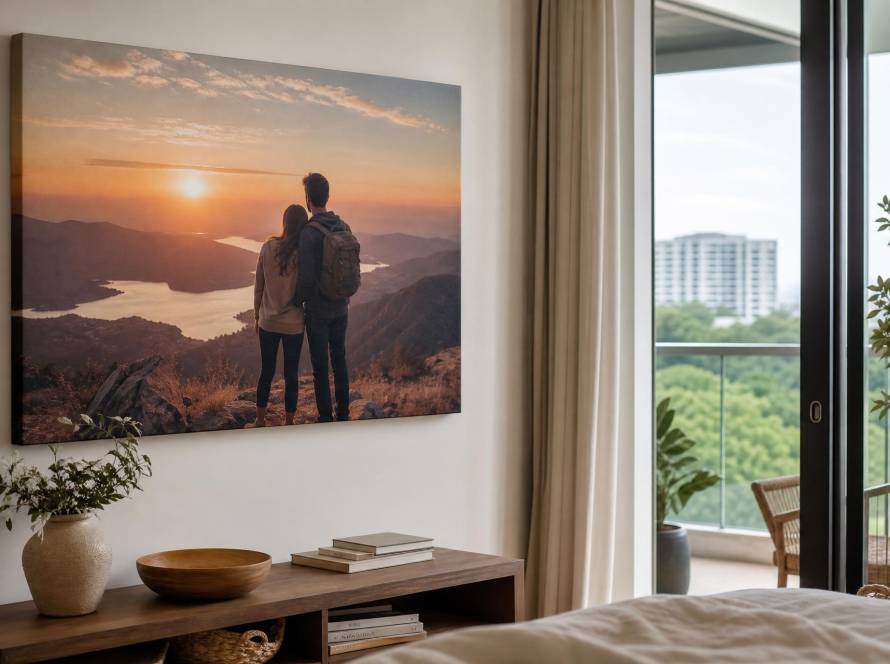
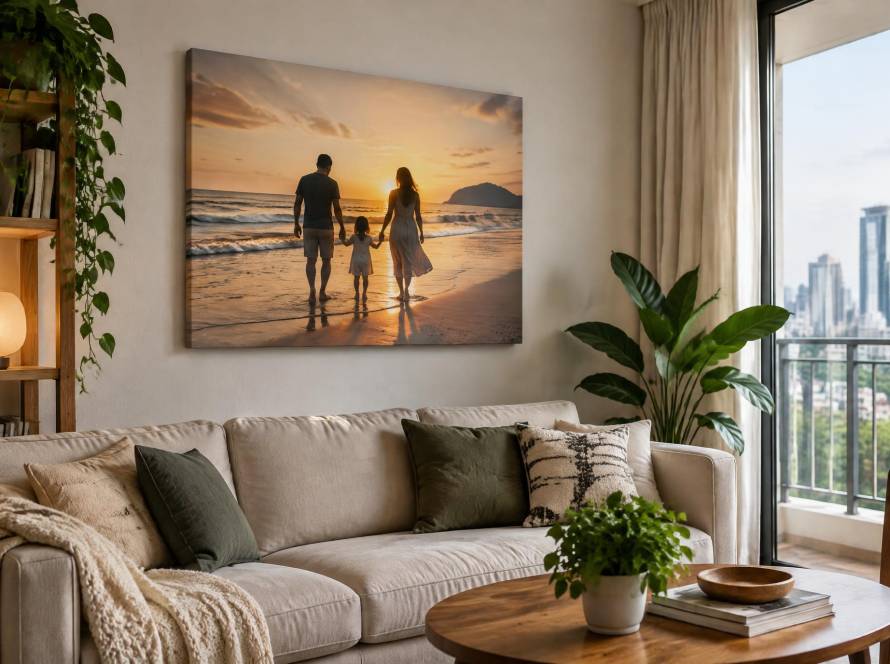
Introduction to the Artist and Their Background
For many visual artists, the leap from studio walls to a gallery exhibition is a defining milestone. For Singapore-based fine art photographer and mixed-media artist, Lin Mei, that moment came in early 2024 when she debuted her collection Layers of Light at a gallery in Gillman Barracks. With a background in graphic design and a deep appreciation for the interplay of texture and colour, Lin had long wanted to present her work in a format that felt both authentic and durable—something that could withstand Singapore’s humidity while retaining the depth of her original pieces.
Lin’s creative journey didn’t start with canvas. Like many casual photographers in Singapore, she experimented with standard photo paper and digital frames. But when she began preparing for her first solo exhibition, the constraints of a rental HDB flat—where wall space is precious and lighting conditions vary—forced her to think carefully about presentation. She needed a medium that would feel substantial, could be printed locally, and would hold up over time in a tropical climate. That’s when she discovered canvas prints.
Initial Concept and Vision for the Exhibition
Connecting Art with Everyday Spaces
Lin’s exhibition concept revolved around the idea of home—how light falls differently in a BTO living room compared to a condo balcony, and how we capture those fleeting moments. She wanted her pieces to resonate with Singapore homeowners, many of whom see art as an investment for their space rather than just decoration. Her vision was to make gallery-quality work that felt at home in a typical Singapore flat, not just in a white-walled gallery.
Why Canvas Became the Medium of Choice
Lin initially considered framing her photographs behind glass, but she quickly realised that reflections and glare—especially in Singapore’s bright interiors—would distract from the subtle tones of her pieces. Canvas printing offered a matte, glare-free surface that felt warm and tactile. It also allowed her to extend images around the edges, giving each piece a finished, gallery-wrapped look without the need for an external frame. This was particularly important for her series of urban landscapes shot in Tiong Bahru and Joo Chiat, where she wanted the viewer to feel immersed in the scene.
Canvas Printing Techniques Used in the Collection
Colour Calibration and Proofing
One of the first technical steps in Lin’s canvas printing journey was ensuring her digital files matched the final output. Singapore’s print shops often face challenges with humidity affecting paper and ink, but modern canvas printers use archival-grade inks and coated canvases that resist fading and moisture. Lin worked with her chosen print studio, Canvas Craft, to produce test proofs. She adjusted her monitor’s colour profile and requested a physical sample to see how the ink absorbed into the canvas texture. The matte finish brought out the warmth of her sunrise shots—something glossy paper could not achieve.
Stretching and Framing Options
For the exhibition, Lin chose a gallery-wrap style with a depth of 1.5 inches. This gave her pieces a sculptural quality that worked well on the gallery’s white walls. Canvas Craft offers a range of depths and finishing options, which allowed Lin to keep the cost manageable while still achieving a professional look. She also opted for a protective varnish spray to guard against dust and the occasional high-humidity spell—a practical consideration for any artwork that will later hang in a Singapore home.
Challenges Faced and Solutions Found
Managing Colour Consistency Across a Series
Any artist printing a series of images will tell you that maintaining colour consistency from one print to the next is harder than it looks. Lin’s collection included photographs taken at different times of day and under varying cloud conditions. On her first batch of test prints, the blues appeared slightly cooler than on her screen. Rather than adjusting the files blindly, she checked the print with a calibrated light source—a simple step that many hobbyists overlook. She then worked with the print technician to tweak the ICC profile, ensuring that each piece in the series had a cohesive palette.
Humidity and Storage Before the Opening
Singapore’s relentless humidity is a known challenge for canvas prints, especially if they need to be stored for several weeks before an exhibition. Lin stored her finished prints in a dry, air-conditioned space, using acid-free tissue paper between each piece. For artists and photographers who lack climate-controlled storage, Canvas Craft’s FAQ page offers tips on caring for canvas prints in humid environments—including avoiding direct wall contact and using dehumidifiers in the room. Lin also invested in simple foamcore backing to keep the prints flat during transport.
Transporting Large Pieces in a Compact City
Getting eight large-format canvas prints from the studio to the gallery in a taxi was, in Lin’s words, “a Tetris puzzle.” Most taxis and private-hire vehicles in Singapore can accommodate a few 24×36-inch prints if you fold down the rear seats. For larger sizes, Lin recommends booking a lorry via a moving service like Lalamove or asking the print studio if they offer delivery. Canvas Craft provides delivery options for bulk orders, which saved Lin the hassle of squeezing fragile artwork into a Grab car.
The Debut: Gallery Opening and Public Reaction
On a humid Saturday evening, Lin’s Layers of Light exhibition opened its doors. The gallery space on the second floor of a conserved shophouse featured exposed brick walls and recessed lighting—an ideal setting for the texture-rich canvas prints. Visitors included interior designers, fellow photographers, and curious homeowners from the neighbourhood. Several guests remarked on how the canvas prints seemed to pull them into the scenes—a quality that Lin attributes to the matte surface and the subtle weave of the cotton-polyester blend canvas.
One piece in particular, a twilight shot of a BTO block in Punggol with warm lights flickering on, was sold within the first hour. The buyer, a young couple who had just collected the keys to their new flat, said the print reminded them of their own evening walks. For Lin, that reaction was the ultimate validation: her canvas printing journey had come full circle, connecting art with the everyday lives of Singaporeans.
If you’re interested in seeing more canvas print possibilities, you can browse the Canvas Craft gallery for inspiration—it showcases a range of styles from fine art to family portraits.
Reflections and Future Plans
Now that the exhibition has ended, Lin is planning a second series focused on Singapore’s hidden green spaces—community gardens and nature corridors. She intends to stick with canvas printing for this next project, citing its durability and the way it gives her photographs a painterly feel. She also plans to offer smaller, more affordable prints for gift buyers—think 12×16 inch pieces that can fit into a condo study or a tight HDB hallway. Singaporean gift-givers, she notes, often appreciate something unique and locally made for occasions like housewarmings or weddings.
Lin’s advice to fellow artists and photographers? Start small. A single test print can teach you more about colour and texture than hours of screen time. And when you find a printing partner who understands your vision—one that offers clear sizing options, archival materials, and reliable delivery—it transforms the entire experience. Canvas Craft’s sizes and prices page is a good starting point if you’re curious about options for your own projects.
Ultimately, Lin’s story shows that the path to a gallery wall doesn’t require a massive studio or a huge budget—it requires a clear idea, a willingness to test and refine, and a medium that honours the work. For her, canvas prints became that medium.
Frequently Asked Questions
How long do canvas prints last in Singapore’s humidity?
With proper care—avoiding direct sunlight, using a dehumidifier in the room, and keeping the print away from exterior walls—an archival canvas print can last decades without noticeable fading or warping. Most professional print studios, including Canvas Craft, use UV-resistant inks and coated canvases designed for tropical climates.
Can I print a photograph taken with my phone on canvas?
Absolutely. The key is image resolution. A modern smartphone camera can produce files large enough for prints up to about 16×20 inches. For larger sizes, it’s best to check with the print studio—they can advise on minimum resolution. Canvas Craft’s order page provides guidelines for file uploads.
What size canvas print is best for a typical HDB living room?
Many Singapore homeowners choose a single 24×36 inch or 30×40 inch canvas as a focal point above a sofa. For a gallery wall arrangement, smaller 12×16 inch or 16×20 inch prints grouped together can also work well. Measure your wall space and consider the viewing distance before ordering.
Do canvas prints come ready to hang?
Most gallery-wrapped canvas prints come with the frame (stretcher bars) built-in, and the canvas is stretched taut. A wire or sawtooth hanger is typically attached to the back so you can hang it immediately. Some studios, including Canvas Craft, offer optional framing or mounting if you prefer a different look.
Is canvas printing more expensive than traditional framing?
It depends on the size and the frame you choose. A simple gallery-wrapped canvas can be more affordable than a custom-framed print under glass, especially for larger sizes. Canvas also eliminates the need for a separate frame, which saves on both cost and weight—an advantage if you plan to move or rehang the piece often.