

Hook: A behind-the-scenes photographer canvas case study
This is a practical, behind-the-scenes photographer canvas case study of a local Singapore photographer whose gallery wraps were selected for the lobby of a boutique hotel. You’ll read the hotel brief and selection criteria, the printer and material choices, how files were prepared, and how delivery and mounting were coordinated in a humid, busy public space. There are concrete specs and lessons that photographers and small studios can use when pitching for similar commissions.
Project brief from the hotel and selection criteria
The hotel wanted a strong first impression: a row of three large landscape canvases for the main lobby, each about 2.4 m wide by 1.2 m tall, to complement their contemporary wood-and-marble interior. The brief emphasised:
- High visual impact from the entry and reception desk
- Durability for a high-traffic public area (constant footfall, occasional luggage contact)
- Colours that held up under warm, mixed lighting (LED downlights plus natural daylight from the atrium)
- A cohesive narrative across the three canvases that reflected local identity without being literal — think evocative Singapore scenes rather than tourist postcards
The selection panel comprised the hotel’s design consultant, operations manager and the general manager. Their evaluation focused on composition, print quality (sharpness and accurate colour), frame integrity, and evidence that the chosen materials would last in a public environment. The photographer’s presentation included mockups in situ and a clear installation plan — both of which helped the proposal stand out.
Photographer’s file preparation and canvas format choices
Getting the files right was as important as the photography itself. For large gallery wraps, the photographer followed a disciplined workflow:
Resolution and cropping
At the final print size (2.4 m x 1.2 m at 150–200 ppi equivalence for large-format viewing), the photographer supplied files at a minimum of 150 ppi at final dimensions for quality viewing distance typical of hotel lobbies. Since most modern cameras provide high-resolution RAW files, they exported TIFF files in Adobe RGB for a wider colour gamut, but converted to the printer’s preferred profile during final prepress. They also supplied slightly wider image areas to allow for wrap overlap (see below).
Gallery wrap format
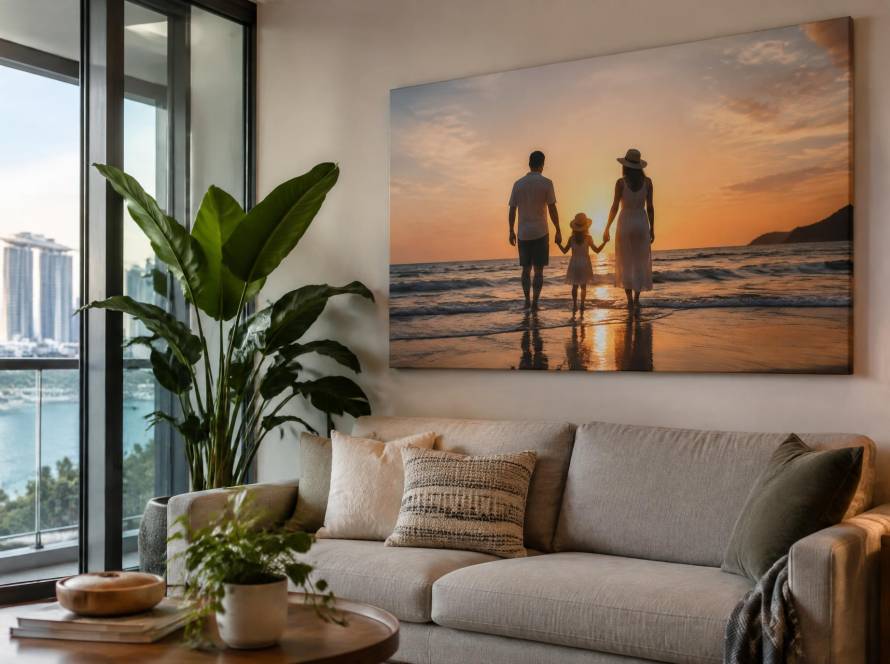
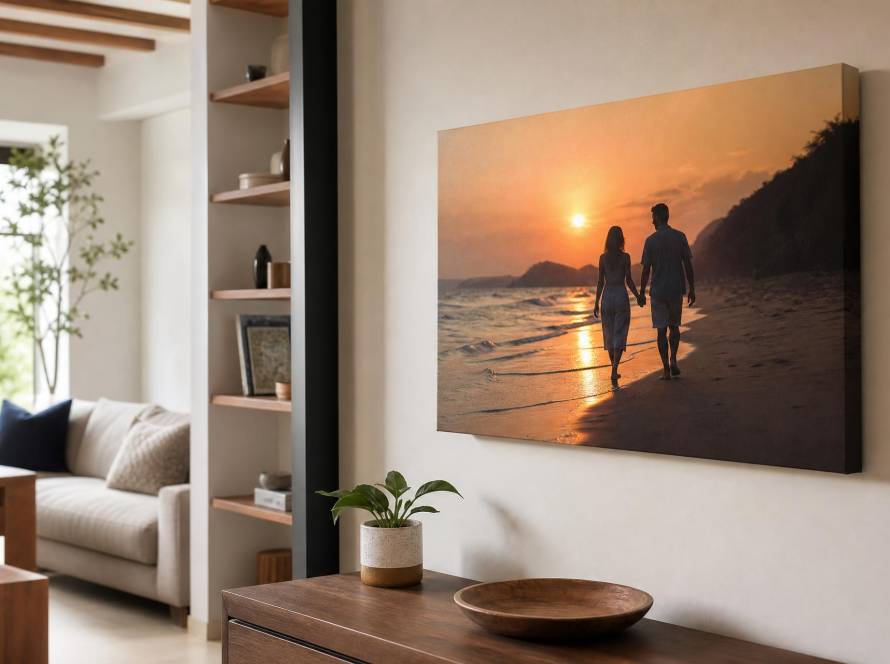
The photographer chose gallery wraps (image wrapping around the stretcher bars) rather than framed prints for two reasons: a clean contemporary look that matched the hotel interior, and a less obtrusive edge compared to heavy framing for large pieces. For a 2.4 m width, the stretch depth was 45 mm — deep enough to feel substantial but not so deep that the canvases would protrude awkwardly in the lobby flow.
Bleed and edge strategy
When working with gallery wraps you must design with the wrap-around area in mind. The chosen approach was to keep the main subject clearly within the visible front area and use neutral textures or sky for the wrap edges, avoiding important features like faces or horizons on the 45 mm sides. The files included an extra 50 mm bleed on all edges to accommodate stretching and final trimming.
Proofing
A small colour-accurate proof was printed first to confirm tone and contrast under simulated lobby lighting. Lighting in many Singapore interior spaces skews warm; to avoid surprises the proof was assessed under a combination of cool and warm light sources.
Material and finish decisions for high-traffic public spaces
For public areas such as hotel lobbies, material choices must balance aesthetics and longevity. The team considered several options and settled on the following:
Canvas substrate
A high-quality polyester-cotton blend canvas was selected for its dimensional stability in Singapore’s humidity. Pure cotton canvases can expand or sag more in high humidity; blended canvases with a tighter weave are less susceptible. The canvases were primed and coated with a flat museum-grade coating to reduce glare under lobby lights while preserving colour depth.
Coatings and protection
Given the exposure to fingers and occasional cleaning, a UV-stable varnish with anti-fungal and anti-stain properties was applied. These coatings help reduce ultraviolet fading from indirect sunlight and smooth surfaces for easier wiping. The finish chosen was a low-sheen matte to minimise reflections from spotlights while keeping colours vibrant.
Stretching and framing
Stretcher bars were kiln-dried, finger-jointed hardwood to avoid warping. The stretcher depth of 45 mm provides a premium presence suitable for a hotel lobby. The artist also requested a hidden wire and D-ring system recessed into the back so the canvases would sit close to the wall — a minor detail that makes a big visual difference in a hotel setting.
Logistics: delivery, on-site mounting and coordination
Large pieces need careful logistics planning, especially in Singapore where loading bays and building access times can be restricted.
Pre-installation survey
Before printing, the photographer and the printer visited the hotel to confirm exact wall measurements, wall material (plasterboard over concrete), and the location of nearby light fixtures. This avoided surprises on installation day and allowed for required anchor specifications to be determined in advance.
Transportation and packing
The canvases were transported flat in custom crates to prevent edge damage. Each canvas was cushioned with acid-free tissue and blocked to avoid movement in transit. For Singapore’s climate, crates included desiccant packs to moderate moisture in the container, and the printer ensured minimum handling exposure during the short cross-island transit.
On-site mounting
Mounting took place early on a weekday morning when the lobby was quiet. The hotel provided access to an internal service lift and a maintenance staff member to assist. The installation team used stainless steel anchors suitable for concrete walls and set the hangers so the top of the canvases aligned perfectly with the reception desk sightlines. A laser level and a spacing jig made the alignment precise across the three canvases.
Client feedback from the hotel and public reception
The hotel reported immediate positive remarks from guests and staff. The design consultant noted that the low-sheen finish reduced glare from the downlights while maintaining colour punch. Operational staff appreciated the practical choice of materials: the surface was easy to dust with a microfibre cloth, and the frames have remained square after six months in service.
From the public perspective, the three-piece installation now anchors the lobby’s arrival sequence. The hotel recorded qualitative feedback through guest comments, noting that the artwork created a calmer, more distinctive arrival experience compared with their previous decorative choices.
Advice from the photographer for peers seeking similar commissions
The photographer shared practical tips for other Singapore-based photographers aiming for commercial or hospitality commissions:
1. Understand the client’s operational needs
Hotels and public spaces are run for people and processes. Ask about cleaning routines, wall materials, lift dimensions and peak check-in times. A design that looks good but is impractical to maintain won’t survive long in a commercial setting.
2. Offer mockups and a clear installation plan
Visual mockups that show the art in situ help decision-makers imagine the final outcome. Include mounting details, spacer measurements and suggested lighting adjustments so the client sees you’ve thought through execution as well as aesthetics.
3. Choose materials sensibly for the local climate
In Singapore, consider canvas blends that resist humidity-related issues and coatings that protect from UV and dust. Mention specifics in your pitch to demonstrate competence (e.g., stretcher depth, coating type, hardware). Many clients appreciate the pragmatic detail.
4. Build relationships with a reliable print partner
Having a dependable print studio simplifies large projects. The photographer in this case worked closely with a local studio — Canvas Craft — to align print proofs and delivery windows. Good communication with your printer reduces errors and last-minute surprises.
How the project influenced the photographer’s portfolio
Securing a hotel lobby commission became an important milestone on the photographer’s CV. The project provided large-format workmanship to showcase in portfolio galleries and helped demonstrate the ability to handle commercial briefs. The photographer used professional in-situ images of the installation to update their portfolio and to include a short case study for future pitches. This kind of documented experience reassures future clients that the photographer understands both creative and logistical demands.
Beyond marketing, the project pushed the photographer to refine their workflow for large-format files, colour management and proofing — skills that translate into better results for personal and commissioned work, whether that’s prints for HDB living rooms, condo show units, or gifts for milestone occasions like weddings and housewarmings.
FAQ
Q: What is the best canvas depth for a hotel lobby?
A: Common depths for a premium look are 40–50 mm. These sit well in public spaces and don’t appear flimsy from a distance. Choose a depth that complements the wall proportions and sightlines of the space.
Q: How do you protect gallery wraps in Singapore’s humidity?
A: Use a stable polyester-cotton blend or synthetic canvas with a quality primer and UV-stable varnish. Kiln-dried stretcher bars, proper packing and controlled storage before installation also reduce the risk of warping or mould in humid conditions.
Q: Can a photographer handle installations or should the hotel use their own contractors?
A: Many photographers arrange installations through their printer or an experienced installer. For public and high-wall installations, involving a professional installer — or working with a print studio that offers installation — is advisable to meet safety and building-code requirements.
Q: How should I price a lobby commission?
A: Pricing depends on image licensing, print size and materials, finishing, installation complexity, and time. Include separate line items for image licensing (if applicable), printing and finishing, packaging and transport, and on-site installation to keep proposals transparent.
Q: Where can I see similar projects and printer options?
A: Look for portfolio case studies and gallery pages that show in-situ installations. If you want practical information for producing large-format work, our For Photographers page includes tips and checklists, and the Gallery and Order page can give you an idea of finishes and delivery options.
For photographers and studios in Singapore, commercial projects like this one are as much about clear communication and planning as they are about the image itself. This photographer canvas case study shows that attention to material choices, practical mockups, and a reliable print and installation plan can turn a good photograph into a lasting piece of hospitality design. The collaboration with a local printer such as Canvas Craft helped streamline proofs and delivery, making the whole process smoother for client and photographer alike.


2 Comments
Jake1534
Refer friends, collect commissions—sign up now!
Dina3627
Earn passive income with every click—sign up today!