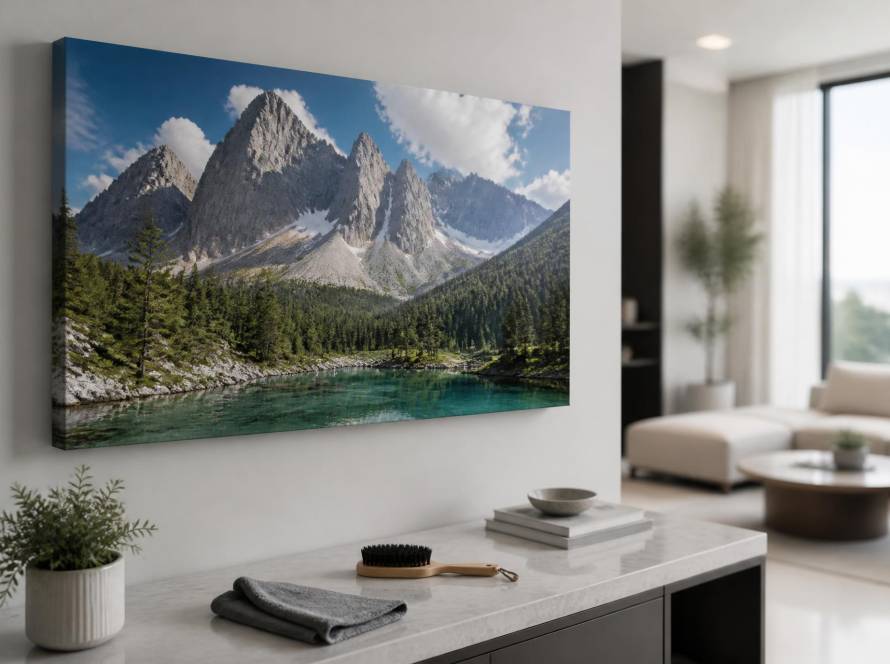
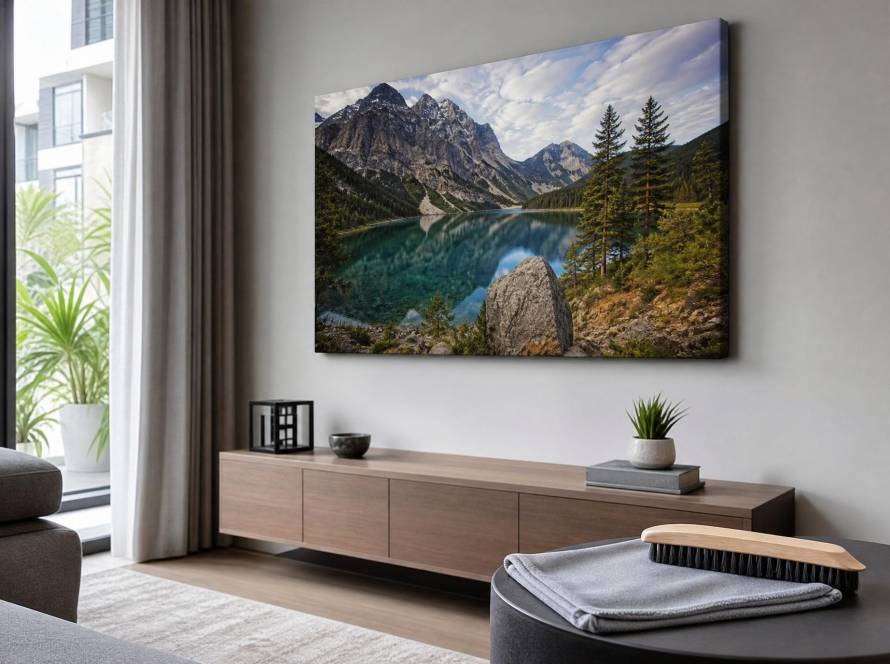
Singapore’s tropical climate brings high humidity year-round, which can pose challenges for canvas wall art. Moisture in the air, combined with fluctuating indoor temperatures, may lead to mould growth, warping, or fading over time. With a few practical habits, you can keep your canvas prints looking their best without complicated routines or expensive products. This guide covers straightforward cleaning methods, preventive measures, and storage tips tailored for humid conditions.
Understanding Humidity Risks and Common Signs of Trouble
Relative humidity in Singapore often hovers between 70% and 90%. Canvas, being a porous material, can absorb moisture from the air. Over time, this can cause:
- Mould and mildew – visible as dark spots or a musty smell, especially on the back of the canvas or along the frame.
- Warping or sagging – the canvas may lose its tension if the wooden stretcher frame absorbs moisture.
- Colour fading – UV rays from direct sunlight accelerate pigment breakdown, and humidity can worsen the effect.
- Yellowing – varnishes or protective coatings may discolour in damp conditions.
Check your canvas prints every few weeks. Look for any discolouration, texture changes, or odours. Early detection makes treatment much simpler.
Daily and Weekly Dusting Methods That Are Safe for Canvas
Dust accumulates quickly in Singapore’s urban environment. Regular dusting prevents particles from embedding into the canvas fibres.
What to use
- Soft, lint-free microfiber cloth – gently wipe the surface in one direction. Avoid circular motions that can grind dust into the print.
- Soft-bristled brush – for textured canvas, a clean makeup brush or artist’s brush works well to lift dust from crevices.
- Compressed air duster – use from a distance of about 30 cm to blow away dust without touching the surface.
What to avoid
- Feather dusters – they can snag the canvas or leave residue.
- Wet cloths or sprays – moisture is the enemy. Never apply water or cleaning solutions directly to the canvas.
- Vacuum cleaners without a brush attachment – the suction can pull the canvas or damage the print.
A quick dust once a week is usually enough for most homes. If your canvas is in a kitchen or near an open window, increase the frequency.
Dealing with Light Stains and Smudges Without Damaging the Print
Accidents happen – a fingerprint, a splash of coffee, or a smudge from a curious child. For light stains, act quickly but gently.
Dry method first
Try to lift the stain with a dry microfiber cloth. If that doesn’t work, move to a slightly damp approach.
Damp method (only for stubborn marks)
- Dampen a clean cloth with distilled water – tap water may contain minerals that leave residues.
- Wring it out thoroughly so it is barely moist.
- Blot the stain gently – do not rub. Rubbing can push the stain deeper or damage the ink layer.
- Pat dry immediately with a dry cloth.
- Let the canvas air dry in a well-ventilated area away from direct sunlight.
Never use household cleaners, alcohol, bleach, or abrasive pads. These will strip the print or cause discolouration. If the stain persists, consider consulting a professional conservator.
Preventing Mould: Ventilation and Positioning Tips
Mould is the most common issue for canvas art in Singapore. Prevention is far easier than removal.
Positioning your canvas
- Avoid hanging canvas on external walls that face the sun or are prone to condensation. Internal walls tend to have more stable temperature and humidity.
- Keep at least 5 cm of space between the canvas and the wall to allow air circulation. Use wall spacers or offset hangers.
- Do not place canvas in bathrooms, kitchens, or laundry areas where steam and moisture are constant.
Ventilation
- Run a dehumidifier in the room, especially during rainy seasons. Aim for indoor humidity below 60%.
- Use ceiling fans or air conditioning to keep air moving. Stagnant air encourages mould growth.
- Open windows periodically to exchange humid indoor air, but avoid doing so during heavy rain or when outdoor humidity is above 80%.
What to do if you spot mould
If you see small mould spots, isolate the canvas immediately. Take it outdoors to a shaded, dry area. Gently brush off surface mould with a soft brush. Then place the canvas in a dry, ventilated room with a dehumidifier for 24–48 hours. Do not use bleach or vinegar – these can damage the print. For extensive mould, consult a conservator.
Avoiding Sun Damage and Managing UV Exposure
Direct sunlight fades prints over time, even with UV-resistant inks. In Singapore, where sunlight is intense year-round, protection is essential.
Practical steps
- Hang canvas away from windows that receive direct sunlight, especially between 10 a.m. and 3 p.m.
- Use UV-filtering window film or curtains to reduce exposure.
- Rotate your canvas prints seasonally – move them to a different wall every few months to even out any fading.
- Consider a UV-protective spray designed for canvas art. Test on a small corner first to ensure it does not alter the colour or finish.
If you are ordering a new canvas print, you can discuss protective coatings with your printer. Many Singapore canvas printing businesses, including Canvas Craft, offer options that add a layer of UV resistance. For existing prints, a UV-protective glass frame can be added, though this changes the look from a traditional gallery wrap.
Short-Term Storage Tips for Humid Conditions
If you need to store canvas prints temporarily – during a move, renovation, or seasonal rotation – follow these guidelines:
- Wrap the canvas in acid-free paper or unbleached muslin cloth. Avoid plastic wrap, which traps moisture.
- Place the wrapped canvas in a cardboard box with silica gel packets to absorb humidity.
- Store in a cool, dry room with a dehumidifier. Avoid attics, basements, or outdoor sheds.
- Do not stack heavy items on top of the canvas. Store it upright or flat with plenty of cushioning.
- Check the canvas every two weeks during storage. If you notice any dampness or mould, address it immediately.
When to Consult a Professional Conservator
Most canvas care can be handled at home, but some situations require expert help:
- Mould has spread across more than 10% of the surface.
- The canvas has torn, punctured, or separated from the stretcher frame.
- The print shows significant fading or colour shift that you want restored.
- The canvas has a musty smell that persists after airing out.
A professional conservator can clean, re-stretch, or treat the canvas with specialised equipment. For valuable or sentimental pieces, the cost of conservation is often worth it.
Checklist: Quick Care Routine for Busy Households
Use this simple checklist to keep your canvas wall art in good condition:
- ☐ Dust weekly with a microfiber cloth or soft brush.
- ☐ Check for mould or stains every two weeks.
- ☐ Maintain indoor humidity below 60% with a dehumidifier or air conditioning.
- ☐ Keep canvas away from direct sunlight and external walls.
- ☐ Rotate prints seasonally to prevent uneven fading.
- ☐ Store spare canvases in acid-free paper with silica gel.
- ☐ Act quickly on stains – blot, don’t rub.
By following these steps, you can enjoy your canvas prints for years without the worry that humidity will ruin them. For more inspiration on choosing the right canvas for your space, browse the gallery or check the sizes and prices page. If you have questions about caring for a specific print, the FAQ section may have the answer.
Frequently Asked Questions
Can I use a damp cloth to clean my canvas print?
Only for light stains and only if the cloth is barely damp with distilled water. Always blot, not rub, and dry immediately. For regular dusting, use a dry cloth.
How often should I dust my canvas wall art?
Once a week is sufficient for most homes. If your canvas is in a high-traffic area or near an open window, dust every few days.
What should I do if I see mould on my canvas?
Isolate the canvas, take it to a shaded dry area, and gently brush off surface mould. Then place it in a dry, ventilated room with a dehumidifier for 24–48 hours. For extensive mould, consult a professional conservator.
Is it safe to hang canvas in a bathroom or kitchen?
It is not recommended. The constant steam and moisture in bathrooms and kitchens create ideal conditions for mould and warping. Choose a living room, bedroom, or hallway instead.
Does Canvas Craft offer UV-protective coatings?
Canvas Craft provides options that can help protect your print from UV damage. You can discuss these when ordering. For more details, visit the order page or contact the team.