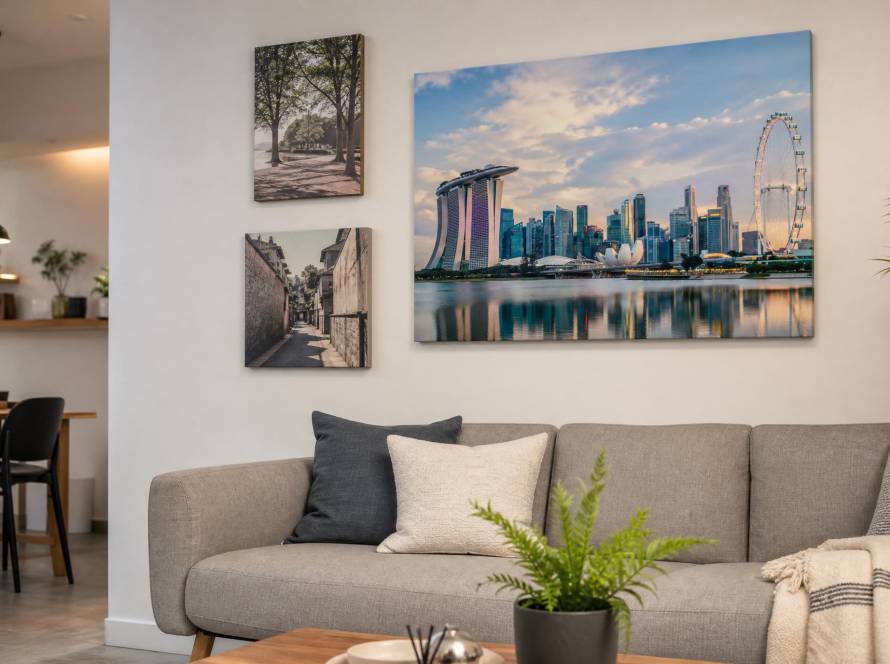
Renting in Singapore often means living with rules you did not write. Tenancy agreements, landlord preferences and building management guidelines can all shape what you are allowed to do with a wall. Canvas wall art is a popular way to make a rental feel like home, but the practical question is not simply “which print looks good?” It is “what can I put on this wall, and what do I need to confirm before I do?”
This article is deliberately a verification-first guide. It does not tell you which fixing method to use, which wall is safe, or how a canvas will behave over time, because those answers depend on your specific tenancy terms, your specific wall, and documentation from the maker of whatever you buy. Instead, it walks through the questions to ask, the information to gather, and the way to document your decisions so you are not guessing.
Start With Your Tenancy Terms, Not the Artwork
Before browsing designs, read the parts of your agreement that cover alterations, fixtures and making good at the end of the tenancy. These clauses are the single biggest constraint on what you can do, and they vary widely between landlords and developments.
Ask yourself:
- Does the agreement mention hanging items, fixtures, or alterations at all?
- Does it require written approval before anything is attached to a wall?
- Does it describe what condition the property must be returned in?
- Is there a deposit that could be affected by wall condition?
If any of this is unclear, put the question to your landlord or agent in writing. A short message asking “am I permitted to hang decorative items, and are there any conditions?” gives you an answer you can refer back to later. Keep that reply.
What to Verify With Your Print Provider
Once you know your tenancy limits, the next step is understanding what you are actually buying. Product documentation is where this information should live, and it is reasonable to ask for it directly.
Useful questions include:
- What does the maker’s own documentation say about the product, in plain language?
- Are there any stated conditions or limitations I should know about before purchase?
- What information is available about the materials and construction?
- Is there guidance on how the item should be handled or displayed?
If a provider cannot point you to written information, treat that as a signal rather than a gap to fill in yourself. Canvas Craft is a Singapore canvas printing business, and you can browse examples in the gallery or review size and price information on the sizes and prices page while you work out what suits your space. Note that Canvas Craft offers custom canvas dimensions by quotation, and customers can enter preferred dimensions on the Order page.
Choosing a Size That Fits the Room and the Risk
Size decisions in a rental are about more than aesthetics. A very large piece may dominate a wall you cannot modify, while a very small piece can look lost. Rather than working from fixed rules, work from relationships.
Relate the canvas to the furniture
Look at the width of the sofa, bed or console the artwork will sit near. A canvas that echoes that width tends to feel intentional, while one that is noticeably narrower or wider can feel accidental. This is a visual judgement, not a measurement you need to get exactly right.
Consider how the room is used
A room used mainly for sleeping, working or hosting will suggest different moods. Softer, calmer imagery suits restful spaces; bolder, more graphic work can carry a living area. Think about the feeling you want when you walk in, then choose imagery that supports it.
Think about your next move
If you expect to relocate within a year or two, portability becomes part of the decision. A single statement piece is easier to transport and re-place than a large coordinated set. If you enjoy rearranging, a small group of pieces gives you more flexibility across different rooms.
Framed or Unframed: Questions Rather Than Answers
Renters often ask whether framed or unframed canvas is better. The honest answer is that it depends on factors only you and your provider can confirm.
- What does the maker say about each option?
- How does each option relate to the look you want?
- How easy is each option to move and re-place?
- Does either option raise questions under your tenancy terms?
Treat marketing language as a starting point, not a conclusion. If a claim matters to your decision, ask for the documentation behind it.
Placement Thinking Without Placement Rules
It is tempting to look for a list of “safe” and “risky” spots. That list would be guesswork unless it comes from verified guidance about your specific wall, your specific product and your specific building. What you can do instead is plan visually and confirm practically.
Useful planning habits:
- Sketch the wall on paper and try different arrangements before committing.
- Consider sightlines from the doorway and from where you usually sit.
- Think about how the artwork relates to existing furniture and lighting.
- Check whether the intended spot conflicts with anything in your tenancy terms.
For anything involving attachment to a wall, follow the manufacturer’s guidance and, where relevant, seek professional advice. Do not rely on general internet advice for your specific situation.
Documenting Condition Before and After
One of the most practical things a renter can do is keep a simple record. Photograph the wall area before you place anything, note the date, and keep any written approvals from your landlord or agent together in one place. If you later have a question about condition, you have a reference point rather than a memory.
This habit costs little and protects you at the end of a tenancy, when deposit discussions tend to happen.
Frequently Asked Questions
Can I hang canvas art in a rental without permission?
That depends entirely on your tenancy agreement and your landlord. Check the terms and, if unclear, ask in writing before doing anything.
Is framed or unframed canvas better for renters?
There is no universal answer. Compare what each option offers against your tenancy terms, your space and how often you expect to move, and ask your provider for documentation.
How do I know if a canvas will suit my wall?
You can judge composition, colour and scale visually. For anything about how a product behaves in your specific environment, ask the maker for written information rather than assuming.
What should I keep as a record?
Photographs of the wall before placement, the date, and any written approval or guidance you received. Keep them together so they are easy to find later.
Where can I see canvas options before deciding?
You can browse the Canvas Craft gallery and check the FAQ page for general information while you plan.