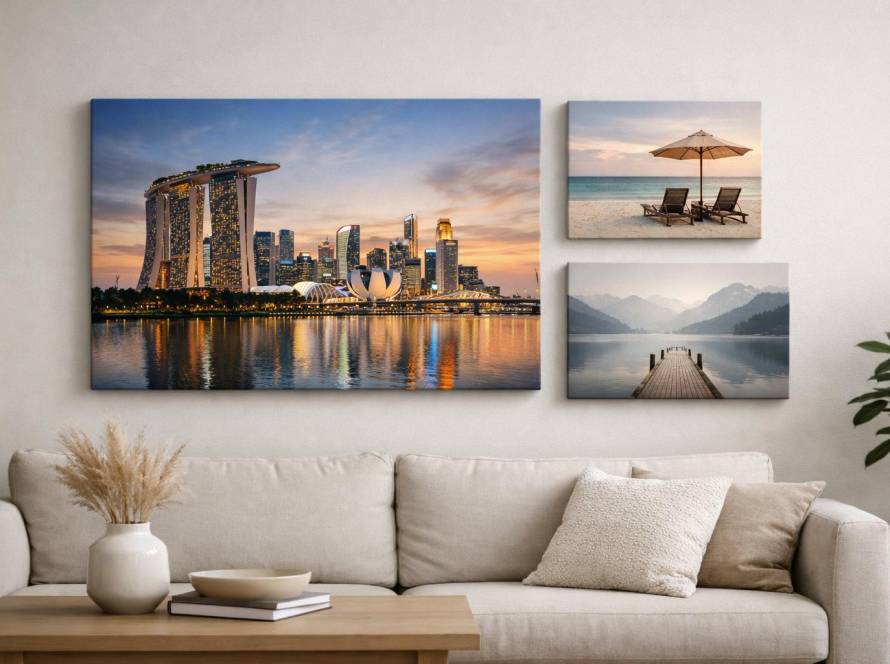
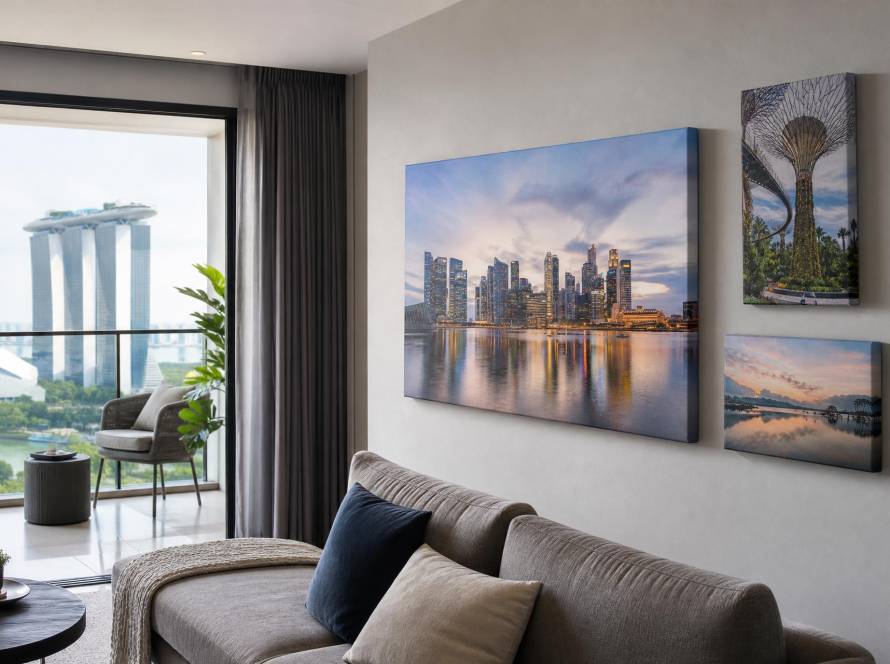
High ceilings are one of the most appealing features of many Singapore condominiums. They make a room feel open, bright and generous. They also create a design problem that catches many homeowners off guard: the wall space is so tall that ordinary artwork can look small, lost or oddly placed.
This guide is about planning canvas wall art for tall walls. It focuses on composition, proportion, visual flow and the questions worth asking before you commit to a layout. It is not a set of installation instructions, and it does not assume any particular wall type, ceiling structure or building rule. Where physical work is involved, the right move is always to check your building’s requirements and consult a qualified professional.
Start by Understanding the Wall, Not the Art
Before browsing designs, spend time looking at the wall itself. High-ceilinged rooms often have walls that are interrupted by windows, air-conditioning points, structural columns, built-in cabinetry or mezzanine edges. Each of these changes what a canvas can do.
Walk the room at different times of day and note:
- Where the wall is genuinely continuous. A tall, uninterrupted surface gives you the most freedom for a vertical or stacked arrangement.
- Where light falls. In Singapore, many condos receive strong directional light through large glazing. Notice which parts of the wall sit in bright light and which stay shaded, because this affects how colours and contrast read.
- What the wall is competing with. A wall beside a full-height window is a different design problem from a wall above a sofa or console.
- Where people actually look. Sightlines from the entry, the sofa, the dining table and the kitchen often matter more than the wall’s centre point.
You do not need precise measurements to make good decisions, but you do need an honest sense of the wall’s shape and rhythm. If you are working with a specific size in mind, Canvas Craft offers custom canvas dimensions by quotation, and you can enter your preferred dimensions on the Order page.
Why High Ceilings Change Composition
On a standard wall, a single canvas placed at a comfortable viewing height usually feels complete. On a tall wall, the same canvas can look like a stamp on a large envelope. The eye reads the empty space above and below as part of the composition, whether you intended it or not.
There are three broad ways to respond:
- Go vertical. A tall canvas or a portrait-oriented piece uses the height rather than fighting it.
- Go stacked. Two or more canvases arranged in a vertical column create a deliberate rhythm up the wall.
- Go grouped. A cluster of smaller canvases can hold a large wall if the grouping is tight and intentional rather than scattered.
Each approach changes the mood. A single tall canvas tends to feel calm and architectural. A stacked column feels more curated and gallery-like. A grouped arrangement feels warmer and more personal, especially when the images share a theme.
Proportion: How Much of the Wall Should the Art Cover?
Proportion is the single most useful thing to think about, and it is also the easiest to get wrong on a tall wall. Rather than chasing a number, think in relationships.
Ask yourself:
- Does the art relate to the furniture below it? A canvas that is noticeably narrower than the sofa or console beneath it can look undersized, even if the canvas itself is large.
- Does the arrangement have a clear top and bottom? On a tall wall, an arrangement that stops abruptly can leave an awkward band of empty space. Decide whether the empty space is intentional breathing room or an accident.
- Is there a visual anchor? A single strong piece, a consistent colour palette or a repeated shape gives the eye somewhere to rest.
- Does the scale match the room’s other elements? Tall windows, large light fittings and high cabinetry all set a scale that artwork should acknowledge.
A useful habit is to view the wall from the furthest point in the room, then from the doorway, then from the seat where you spend the most time. If the arrangement works from all three, the proportion is probably sound.
Creating Visual Flow Between Windows, Furniture and Art
High-ceilinged rooms often have strong vertical lines already: window frames, curtains, columns and tall shelving. Canvas art can either echo those lines or interrupt them.
Echoing verticals tends to feel harmonious. A tall canvas aligned with the edge of a window or the line of a curtain can make the whole wall feel considered. Interrupting verticals can feel more dynamic, but it needs a reason, such as a deliberate contrast in colour or shape.
Consider these relationships:
- Windows: Art placed near glazing competes with the view and the light. Art placed on a solid wall often reads more clearly.
- Furniture: The art should feel connected to the piece below it, not floating independently.
- Mirrors and shelves: These are also vertical elements. A mirror, a tall shelf and a canvas in the same sightline can either balance each other or create clutter. Decide which one is the focal point.
- Light fittings: A pendant or track light draws the eye upward. Art that sits in the same visual zone should be strong enough to hold attention.
If you are planning a larger arrangement, it helps to look at finished examples before deciding. The Canvas Craft gallery shows how different layouts and image types read on a wall.
Vertical Layout Ideas by Room Type
Living Room
The living room usually has the tallest continuous wall and the most furniture to relate to. A single tall canvas above a sofa is a classic solution, but a stacked pair or a narrow vertical column beside a window can work well when the wall is very tall. If the room has a strong view, consider placing art on the wall opposite the window so it does not compete with the outlook.
Dining Area
Dining walls are often viewed from a seated position, which changes the ideal height and scale. A horizontal arrangement can work here because the eye travels along the table. On a tall wall, a horizontal grouping placed at a comfortable seated viewing level, with deliberate space above, often feels more balanced than a single small piece pushed high up.
Stairwell and Mezzanine Walls
These are the walls where high ceilings are most dramatic, and also where planning matters most. A vertical column of canvases can follow the rise of a staircase and create a strong sense of movement. Because these walls are often viewed from an angle and from a distance, simpler, bolder images tend to read better than detailed ones.
Bedroom
Bedrooms usually call for calmer compositions. A single tall canvas or a quiet stacked pair above the bed can use the height without making the room feel busy. Softer colour relationships and simpler subjects often suit the space better than dense, high-contrast arrangements.
Home Office or Study
A tall wall behind a desk can hold a vertical arrangement that frames the seating position. Because this is a room where you spend long periods, images that you are happy to look at repeatedly matter more than dramatic scale.
Planning the Physical Side Safely
High walls raise practical questions that are easy to underestimate. Reaching a tall wall safely, working around windows, and dealing with whatever is inside the wall are all matters that depend on your specific building and wall construction.
Rather than following generic advice, treat these as questions for the right people:
- Does your building management have any requirements or restrictions for wall fixtures?
- Is the wall construction suitable for the approach you have in mind?
- Should a qualified professional assess the wall and carry out the work?
For placement decisions, a paper template or a light outline can help you judge alignment and visual balance before anything is fixed. Keep the focus on how the arrangement looks and feels, and leave the physical method to qualified guidance.
Balancing Scale With Other Décor
Canvas art rarely sits alone. Mirrors, shelving, plants, lighting and textiles all contribute to the room’s visual weight. On a tall wall, the risk is not usually too little decoration but too many competing vertical elements.
A simple approach is to decide on one dominant vertical feature per sightline. If a tall mirror already anchors the wall, the canvas can play a supporting role. If the canvas is the focal point, other elements can be quieter.
Colour is part of this balance too. A canvas that repeats a colour from the room’s textiles or cabinetry tends to feel integrated, while a canvas that introduces an entirely new palette becomes a statement. Neither is wrong, but the choice should be deliberate.
Frequently Asked Questions
How do I choose between one large canvas and several smaller ones?
Think about the mood you want. A single large canvas tends to feel calm and architectural, while a group of smaller canvases feels more collected and personal. On a very tall wall, a single tall piece or a tight vertical stack usually holds the space more confidently than a scattered group.
Should art on a high wall be placed higher than usual?
Not necessarily. The most reliable guide is the relationship between the art and the furniture or sightline below it. Placing art very high can disconnect it from the room, even when the wall is tall. Judge it from where people actually sit and stand.
Can I use canvas art to make a tall room feel less empty?
Yes, scale and grouping are the main tools. A vertical arrangement or a larger canvas can give a tall wall a sense of purpose. The goal is usually to create a deliberate composition rather than to fill every gap.
What if I need a size that is not standard?
Canvas Craft offers custom canvas dimensions by quotation. You can enter your preferred dimensions on the Order page and receive a quotation based on what you need.
Where can I see examples before deciding?
Looking at finished layouts is one of the fastest ways to narrow down your options. The Canvas Craft gallery is a good starting point, and the FAQ page covers common questions about ordering.
Final Thoughts
High ceilings are an opportunity, not a problem. The key is to treat the whole wall as a composition: decide what the eye should follow, how the art relates to the furniture and windows around it, and how much empty space is intentional. Get those relationships right and the height becomes an asset rather than an awkward gap.
Start with the wall, choose a layout that suits the room’s purpose, and keep the physical work in the hands of qualified professionals. If you are ready to explore options, you can browse the Canvas Craft sizes and prices page or begin with the Order page.