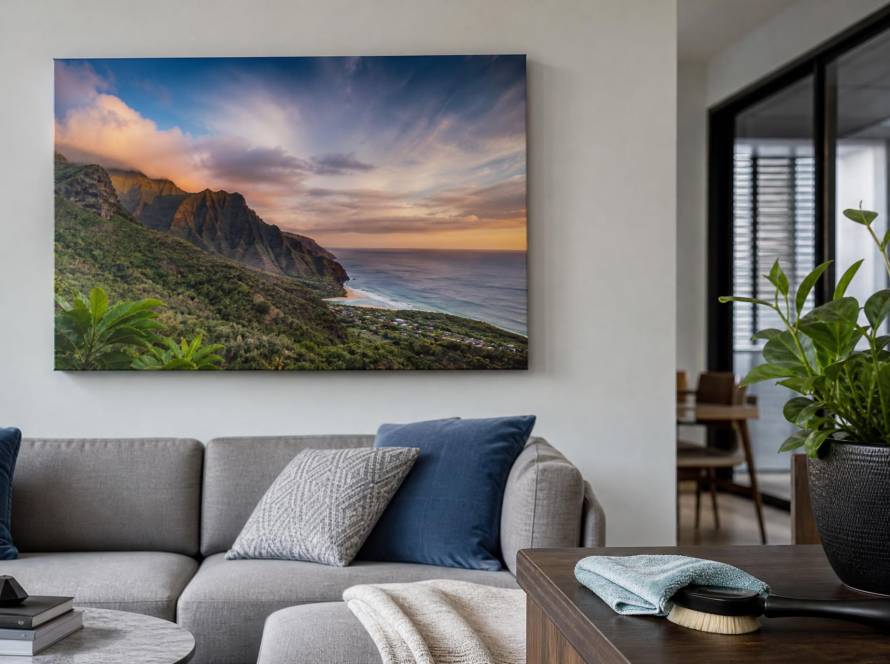
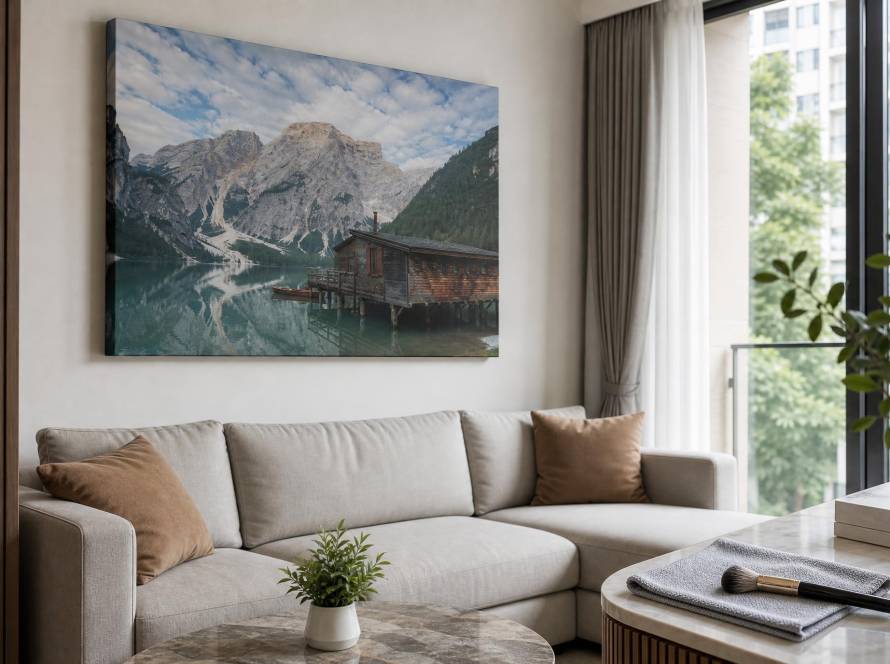
Ordering a canvas print is only half the job. You still need to get it onto the wall, safely and at the right height.
Singapore homes and offices often have a mix of concrete, partition and tiled walls. This guide explains how to handle each type with basic tools.
1. Choose the right wall first
Before you touch any tools:
-
Look at how people move through the room
-
Avoid walls that get constant knocks from doors or chairs
-
Check for direct, harsh sunlight that can fade prints over time
-
Make sure there is enough space around the spot so the canvas does not feel cramped
Once the wall is chosen, measure its width and identify the rough centre. This helps you place the canvas visually, not just technically.
2. Decide on height
A simple rule that works for most situations:
Aim for the centre of the canvas to sit around 145–155 cm from the floor.
This is close to average eye level.
Exceptions:
-
Above a sofa or bed: bottom of canvas 15–25 cm above furniture
-
In a corridor: slightly higher so heads do not brush the canvas
-
In offices: align with other fixtures such as whiteboards or signage
Use a measuring tape and a pencil to lightly mark your chosen height.
3. Hanging on concrete walls
Most HDB and condo structural walls are concrete.
Tools:
-
Hammer drill with masonry bit
-
Wall plugs (rawl plugs) matched to screw size
-
Screws and a small spirit level
-
Pencil and measuring tape
Steps:
-
Measure and mark where the hanging hardware on the back of the canvas sits (for example, the sawtooth hanger).
-
Transfer that measurement to the wall, using your chosen centre and height as reference.
-
Drill a hole at the mark using a masonry drill bit.
-
Insert wall plug fully.
-
Screw in the screw, leaving a small gap for the hanger to catch.
-
Hang the canvas and check with a level. Adjust slightly if needed.
For large canvases (over 105 × 70 cm), use two screws spaced apart for better stability.
4. Hanging on partition (drywall) walls
Some newer flats and offices use partition walls for certain rooms.
Tools:
-
Light-duty wall anchors designed for drywall
-
Drill or awl (depending on anchor type)
-
Screws and level
Steps are similar, but:
-
Do not use plain screws directly into drywall
-
Use proper drywall anchors that spread the load
-
Keep heavy canvases (large sizes) on concrete walls if possible
Always check if there are any electrical cables behind the wall. Avoid drilling near switches and sockets.
5. Hanging on tiled walls
Tiled walls are common in kitchens and some entryways.
Options:
-
If you must drill: use a tile drill bit, drill slowly through tile, then switch to masonry bit behind. This should be done carefully to avoid cracks.
-
If you prefer no drilling: use strong, suitable adhesive hooks rated for the canvas weight and designed for tiles.
Always:
-
Clean the tile surface before using adhesive products
-
Respect the weight rating on the packaging
-
Avoid hanging directly above areas with constant steam or water
For valuable or heavy canvases, mechanical fixings (screws and plugs) are still safer.
6. Using adhesive hooks on painted walls
Adhesive hooks are tempting for convenience.
They work best when:
-
The canvas is small (for example 30 × 30 cm or 45 × 30 cm)
-
The paint is in good condition and fully cured
-
You follow prep instructions exactly (clean, press, wait time)
They are not ideal for:
-
Very humid spots
-
Freshly painted walls
-
Heavy or oversize canvases
If it is a rental and you want to avoid drilling, adhesive hooks can be an acceptable compromise, but accept that they may fail over time.
7. Basic safety and neatness tips
-
Use a small scrap cloth or dustpan when drilling to catch dust.
-
Check there are no water pipes or electrical points in the drilling area.
-
Do not hang heavy canvases directly above beds in children’s rooms unless you are confident in the fixings.
-
Keep the back of the canvas slightly clear of any light switches or wall corners.
8. When to ask for help
If you:
-
Have very large or multiple canvases in a complex layout
-
Need to align with existing wall features and lighting
-
Are unsure about wall type or safe fixings
It may be worth engaging a handyman or installer. A proper job takes little time but saves patched walls later.
Hanging a canvas is not complicated, but a bit of planning and the right fixings will keep it straight, safe and looking intentional in your space.