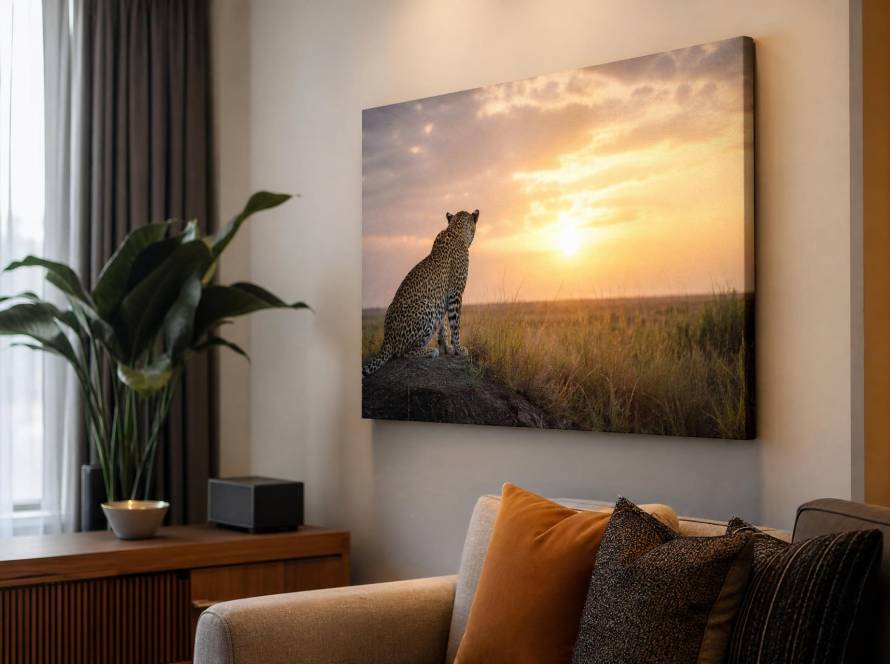
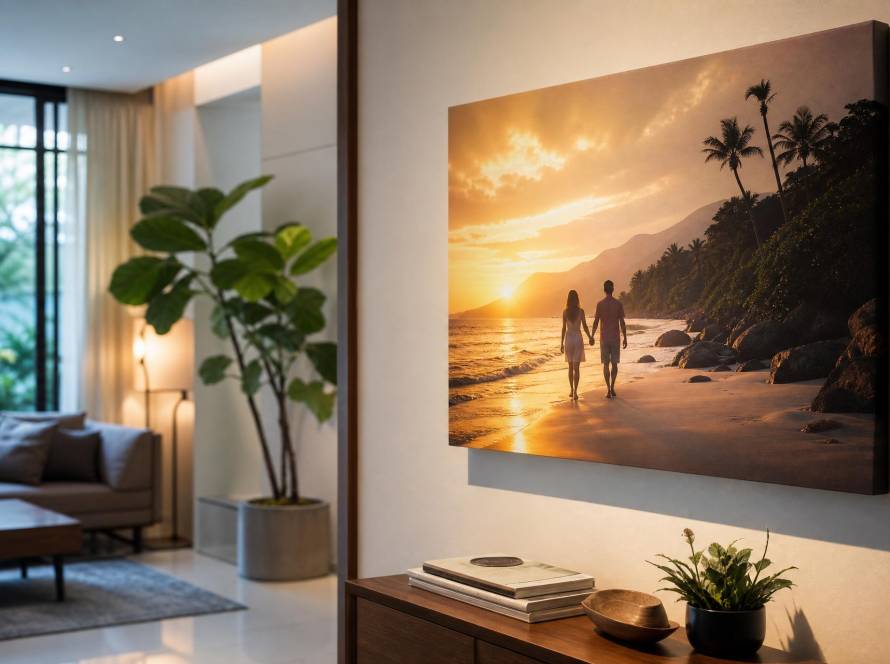
Turning a folder of holiday photos into a wall display is part inspiration and part planning. The inspiration is easy: you already have the memories. The planning is where most families get stuck, because a display that looks cohesive on a wall usually starts with decisions made long before anything is printed. This guide walks through those decisions in order, and it flags the points where you should verify details rather than assume them.
Start with a travel narrative, not a photo dump
The strongest displays usually tell one story rather than showing everything. Before selecting images, decide what the display is about. A single trip, a recurring family destination, a year of small outings, or a theme such as coastlines or city walks all work, but they lead to different selections.
Once the narrative is clear, curate ruthlessly. A useful test is to ask whether an image adds something the others do not: a different place, a different mood, a different person, or a different moment in the story. Images that repeat the same idea can usually be set aside.
Single large print or a themed series?
Both approaches work, and the choice is mostly about the room and the story.
- A single large print suits a strong, self-contained image and a space where one focal point is enough.
- A themed series suits a narrative with several distinct moments, and it gives you flexibility to rearrange or expand later.
If you are unsure about dimensions, note that Canvas Craft offers custom canvas dimensions by quotation, and customers can enter preferred dimensions on the Order page. That is useful when a wall or a series calls for a size that is not standard, but it is worth confirming the details that matter to you before committing.
Colour and tonal consistency across multiple canvases
When several images sit together, viewers read them as one group. Differences in colour temperature, brightness, or contrast become more noticeable in a series than they would be in a single print.
A practical approach is to lay the shortlisted images side by side on a screen and look at them as a set rather than one at a time. Ask whether the group feels balanced, or whether one image pulls attention because it is much warmer, cooler, darker, or brighter than the rest. You can also group images by mood, such as calm and muted versus vivid and energetic, and keep each group together.
If you want a consistent look, it helps to know what adjustments, if any, are applied during production. That is a question for your print provider rather than an assumption to make.
Cropping and image preparation
Cropping is where a good photo can become a better display image. Travel photos often include context that mattered at the time but competes for attention on a wall. Cropping can remove distractions and strengthen the subject.
Two habits help:
- Check how the crop changes the story. Removing a landmark or a background detail can change what the image is about.
- Keep the intended shape in mind. A series usually looks calmer when the images share a similar proportion, unless the variation is deliberate.
For file requirements, resolution expectations, and how your images should be supplied, check the provider’s guidance directly rather than relying on general rules of thumb. The Canvas Craft FAQ is a reasonable starting point for questions of that kind.
Arrangement ideas for halls, staircases, and living rooms
Arrangement is about relationships rather than fixed rules. In a hallway, viewers usually see the display while moving, so a simple, evenly paced sequence tends to read well. On a staircase wall, the display is often viewed at an angle and from below, which affects how the group is perceived as a whole. In a living room, the display usually shares space with furniture, so it helps to think about how it relates to a sofa, a shelf, or a doorway.
A paper template is a low-risk way to test a layout before anything is fixed. Cut paper to the intended shapes, place them on the wall, and step back to check balance, alignment, and sightlines from the positions where people actually sit or walk. This is also the stage to confirm any installation details with the manufacturer or a qualified professional rather than guessing.
Combining maps and captions with photo canvases
Maps, dates, place names, and short captions can turn a set of images into a clearer story. They also add a design decision: whether the supporting elements should match the photos in tone or deliberately contrast with them.
Keep captions short and consistent in style. If you are adding a map, decide whether it is a background for the whole group or a companion piece. As with the photos themselves, it is worth confirming how any additional elements will be produced before you finalise the layout.
Budget and size trade-offs for multi-piece displays
Multi-piece displays involve trade-offs between the number of pieces, the size of each piece, and the overall impact. More pieces can tell a richer story but also demand more wall space and more decisions about consistency. Fewer, larger pieces can feel calmer but leave less room for narrative detail.
A useful exercise is to decide the story first, then the number of pieces, then the sizes. If you are working to a budget, it helps to compare options side by side rather than committing to a layout before you understand the cost implications. You can review available options on the sizes and prices page and see finished examples in the gallery.
A verification-first checklist before you commit
Because care, climate, and material behaviour vary by product and by home, the responsible approach is to verify rather than assume. Before finalising a display, gather the following:
- Product documentation: ask your provider for the written guidance that applies to the specific product you are considering.
- Care and handling questions: direct any questions about cleaning, storage, or long-term care to the maker or a qualified conservator, and follow their guidance rather than general advice.
- Placement questions: if you have concerns about a particular room or position, raise them with the provider or a qualified professional before deciding.
- Condition records: note the date you received the item, keep any documentation, and photograph the item as it looks now. This gives you a clear reference point if you ever need to discuss its condition later.
Canvas Craft is a Singapore canvas printing business, and customers can explore and order canvas prints through the website. Beyond that, the details that matter most are the ones you confirm directly for your own home and your own product.
Frequently asked questions
How many photos should a travel display include?
There is no fixed number. Start from the story you want to tell, then include only the images that add something distinct. A tighter selection usually reads more clearly than a large one.
Should all the canvases be the same size?
Not necessarily. Matching sizes create a calmer, more uniform look, while varied sizes can create emphasis. The right choice depends on the wall and the story.
How do I keep colours consistent across a series?
Review the shortlisted images together as a set, and group them by mood or tone. If you need to know what adjustments are applied during production, ask your print provider directly.
Where can I find guidance on caring for a canvas print?
Ask the maker for the written guidance for your specific product, or consult a qualified conservator. Avoid applying general advice that may not match your item.
Can I order a non-standard size?
Canvas Craft offers custom canvas dimensions by quotation, and customers can enter preferred dimensions on the Order page. Confirm the details that matter to you before ordering.