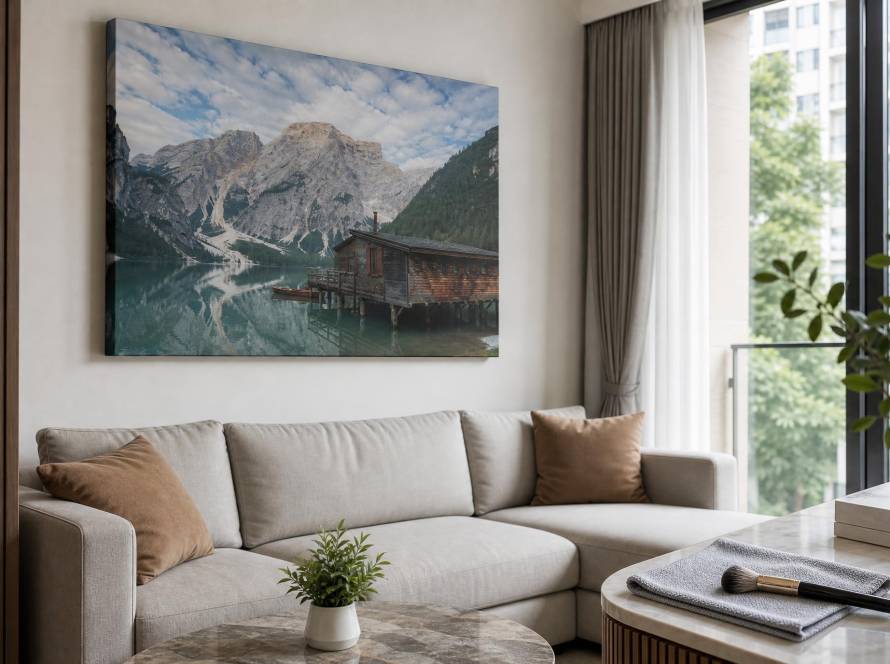
If you own canvas wall art in Singapore, you have probably wondered how to care for it. The honest answer is that care guidance depends on facts about your specific artwork that most general articles cannot know. This guide does not give cleaning, storage, or placement instructions. Instead, it helps you verify what you need to know before you act, so you can make decisions based on your artwork’s actual documentation rather than guesswork.
Why Verification Comes Before Care
Canvas wall art is not a single, uniform product. Different pieces may involve different materials, production methods, and finishing choices. Because of this, a care approach that suits one artwork may not suit another. Without verified information about your specific piece, any general advice is a guess.
Singapore’s climate is often described as humid and warm, but that general description does not tell you how any particular artwork will respond over time. Rather than assume, the safer path is to find out what the maker or seller documented about your piece, and to ask qualified people when that documentation is missing.
This is a verification-first framework. It will not tell you what to use or how to treat your canvas. It will help you ask better questions, find better answers, and keep a record of your artwork’s condition.
What to Check Before Acting on Any Care Advice
Before you follow any care suggestion, whether from a friend, a forum, or a general article, gather the following information about your own artwork.
1. Find the original product documentation
Look for any paperwork, packaging inserts, or digital receipts that came with your canvas. Product documentation is the most reliable starting point because it is specific to your piece. If you bought the artwork from a business, check whether they provided care or handling information at the point of sale.
If you are considering a new canvas print, it is reasonable to ask the seller what documentation they provide. Canvas Craft is a Singapore canvas printing business, and you can explore their gallery and ordering pages to see what information is available before you buy. You can also check their FAQ page for general guidance.
2. Identify what you actually know versus what you assume
Write down what you can confirm about your artwork: where it came from, when you acquired it, and any information the maker provided. Then write down what you are unsure about. This separation matters because assumptions can lead to actions that are difficult to reverse.
For example, you may assume that all canvas prints are made the same way. That assumption is not verified. Without documentation, you cannot know what specific materials or methods were used.
3. Note the conditions where the artwork is displayed
You do not need to diagnose whether a location is good or bad. Instead, simply record observable conditions: Is the artwork near a window? Is it in a room that is often steamy? Does it receive direct light at certain times of day? These observations are facts you can share with a professional if you need advice later.
Do not change the artwork’s location based on general advice alone. If you are concerned, ask the maker or a qualified professional whether your specific piece has any placement considerations.
Questions to Ask a Print Provider or Conservator
If your documentation is missing or unclear, the next step is to ask someone qualified. Here are questions worth asking.
- What can you tell me about the materials and methods used for this specific artwork?
- Does the maker provide any care or handling guidance for this piece?
- Are there any conditions I should be aware of for this specific product?
- If I notice a change in the artwork’s appearance, what should I do first?
- Can you recommend a qualified conservator if professional assessment is needed?
When you ask these questions, write down the answers. A written record helps you track what was recommended and by whom. If you are buying new artwork, you can ask these questions before purchase. Canvas Craft allows customers to enter preferred dimensions on the Order page, and you can ask about documentation at the same time.
How to Document Your Artwork’s Current Condition
Documenting your artwork’s condition is one of the most useful things you can do. It creates a baseline that helps you notice changes over time and gives professionals something concrete to work with.
Create a simple condition record
Take clear photographs of the artwork from a few angles in consistent lighting. Note the date. Write a short description of what you see: the overall appearance, any marks or variations you notice, and where the artwork is displayed. Keep this record somewhere you can find it later.
Do not attempt to treat or clean anything based on your own diagnosis. The purpose of documentation is to observe and record, not to intervene.
Revisit your record periodically
Check your documentation occasionally and compare. If you notice a change that concerns you, that is the moment to seek qualified advice rather than act on a guess. Bring your condition record and your product documentation to that conversation.
What This Means for Gift Buyers and Organisations
If you are buying canvas wall art as a gift, or for an organisation, the same verification-first approach applies. Ask the seller what documentation they provide. If the artwork is for a space where conditions may vary, ask whether the maker has any guidance for that context.
For organisations, it also helps to keep a simple record of when and where the artwork was installed, and who to contact if questions arise. This is not about predicting outcomes. It is about having information available when you need it.
You can browse the Canvas Craft gallery for inspiration, and if you are buying for a business or organisation, the for-pros page may be relevant.
Frequently Asked Questions
Can I follow general cleaning advice I find online?
This guide does not recommend any cleaning method. Check your product documentation first. If you do not have documentation, ask the maker or a qualified professional before doing anything.
Does Singapore’s climate affect canvas wall art?
Singapore’s climate is often described as humid, but whether that affects your specific artwork depends on facts about the piece that this article cannot verify. Ask the maker or a qualified professional about your specific item.
How do I know if my canvas needs professional attention?
If you notice a change that concerns you, document it with photos and notes, then seek qualified advice. Do not attempt to treat the artwork yourself based on general advice.
Where can I find care information for a Canvas Craft print?
Check the documentation provided with your purchase, and review the Canvas Craft FAQ. If your question is not answered there, contact them directly.
Should I change where my artwork is displayed?
This article does not give placement rules. If you are concerned about a specific location, ask the maker or a qualified professional whether your piece has any placement considerations.
The Bottom Line
Canvas wall art care in Singapore is not a one-size-fits-all topic. The most responsible approach is to verify before you act: find your documentation, ask qualified people, and keep a record of your artwork’s condition. This framework will not give you a quick answer, but it will help you avoid actions based on unverified assumptions.
If you are buying new canvas wall art, ask about documentation at the point of sale. If you already own a piece, start with what you can verify and go from there.