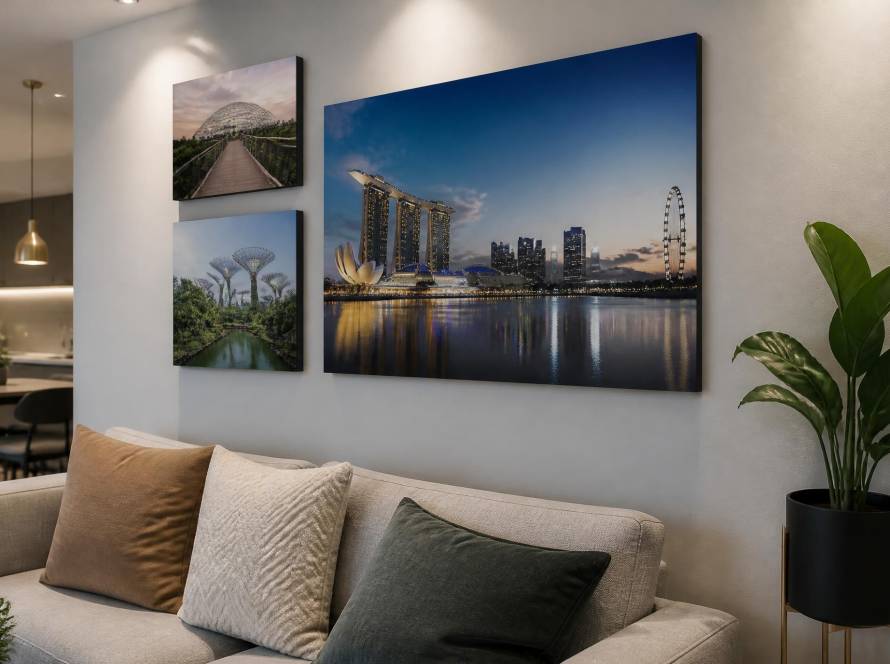
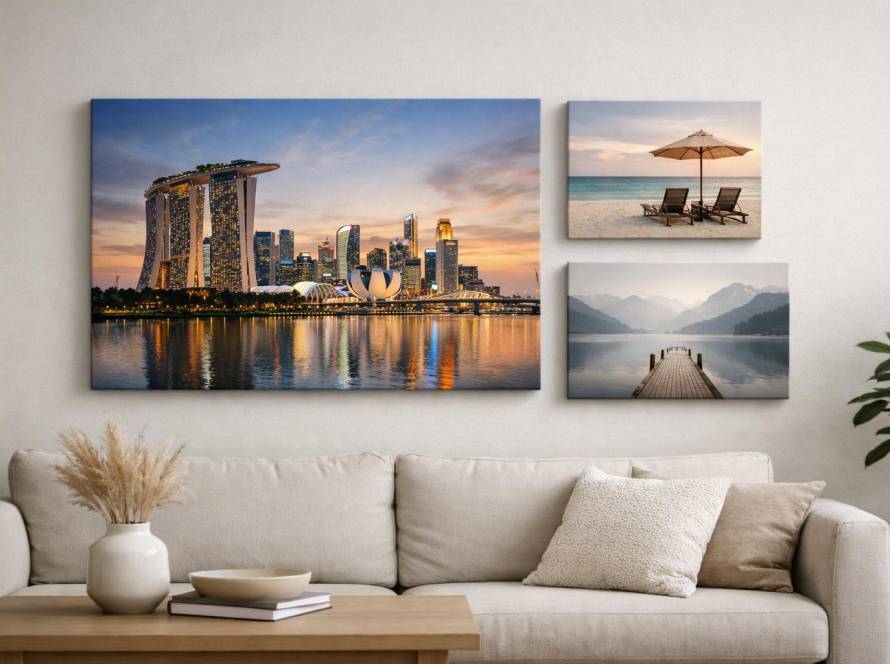
In Singapore, co-living has transitioned from a temporary housing solution to a deliberate lifestyle choice. Whether you’re in a shared HDB flat, a BTO with roommates, or a co-living condo managed by a professional operator, the spaces you inhabit are a blend of private and communal. Thoughtfully chosen canvas wall art can transform these shared environments from merely functional to genuinely welcoming. This post offers practical, evidence-based guidance on selecting and displaying canvas prints in co-living settings, keeping Singapore’s unique climate and space constraints in mind.
Understanding the Dynamics of Co-Living Spaces
Co-living arrangements vary widely in Singapore. Some involve three or four friends in a five-room HDB, while others are professionally operated co-living setups in condos with common living rooms, dining areas, and corridors. The key challenge is balancing individual expression with a cohesive aesthetic that respects everyone’s comfort. Unlike a private home, shared walls are a collective asset. The right canvas wall art can visually enlarge a small common room, soften the edges of a utilitarian space, and even reduce noise perception through visual absorption. In humid Singapore, canvas prints also offer a practical advantage: they don’t trap moisture like framed glass pieces and are easy to maintain.
Space Constraints and Visual Flow
Size is critical. In a typical 99 sqm HDB common area, a single oversized canvas (e.g., 100×70 cm) can act as a focal point, while two or three smaller pieces (e.g., 40×30 cm) in a gallery arrangement can define a reading nook. For condos with open-concept layouts, consider the line of sight from the dining area to the living area. A cohesive series of abstract prints in similar tones can guide the eye and create a sense of flow. Avoid overcrowding: less is more when walls are shared.
Choosing Neutral yet Inspiring Art for Common Areas
Common areas require art that doesn’t polarise. Abstract landscapes, monochrome botanicals, or clean geometric patterns in soft earth tones or muted blues work well. They provide visual interest without dominating conversations. For Singapore’s context, local motifs like a stylised shophouse row, a calm sea at Lazarus Island, or a pandan leaf pattern in faded green can subtly anchor the space to the place while remaining neutral. The key is to avoid high-contrast, emotionally charged imagery (e.g., intense portraits or political themes). Instead, aim for pieces that most residents find pleasant or calming.
Practical Display Tips for Common Walls
- Height: Place the centre of the canvas at eye level (roughly 145-150 cm from the floor). In a co-living space, this ensures everyone — regardless of height — can appreciate it.
- Grouping: For a two-canvas set, align them horizontally about 8-10 cm apart. For three, consider a vertical or L-shaped arrangement over a sofa.
- Lighting: Track lights or picture lights (LED, warm white) can highlight the canvas without UV damage. Singapore’s afternoon sun can fade prints over time, so avoid direct sunlight.
Creating Personal Spaces with Unique Canvas Art
Bedrooms in co-living units are often the only private haven. Here, residents can express individuality freely. A custom canvas print — a favourite travel photo from Bali, a pet portrait, or a blown-up macro shot of a local orchid — can make a small room feel like home. Because canvas wall art is lightweight, it’s easy to mount with command strips (check HDB/condo rules), and easy to replace when tastes change. In a BTO shared flat, we’ve seen tenants use a large black-and-white canvas of Marina Bay to add depth to a small room, making it feel larger without adding visual clutter.
Size Recommendations for Bedrooms
For single occupancy rooms (typically 9-12 sqm in HDBs), a canvas between 40×60 cm and 60×90 cm works well above the bed or near a desk. In larger master bedrooms sharing between two people, consider two canvases of equal size placed symmetrically above the headboard. This creates a balanced focal point that respects both inhabitants’ tastes if they choose the same series or complementary pieces.
Case Studies: Successful Co-Living Art Integration
Case A: Three Flatmates in a Clementi HDB
Three working professionals shared a 4-room HDB. Their common living room had bare white walls. They purchased a tri-fold canvas set (three 50×70 cm panels) featuring a panoramic shot of East Coast Park at sunset — neutral, local, and expansive. The arrangement made the 4m × 5m room feel wider and created a conversation starter. The group reported that the art reduced the space’s ‘temporary’ feel and encouraged more time spent together in the living area.
Case B: Co-Living Condo in Novena
A professionally managed co-living condo with 6 private bedrooms used a cohesive theme of Singapore street photography (black and white) across the corridor and common dining area. Each canvas was mounted in a simple wooden frame (canvas wrap style). The consistent theme provided visual continuity and a sense of curated design. Management noted that the art increased guest satisfaction and even helped with online listing photos for new tenants.
Interested in seeing more examples? Browse the Canvas Craft Gallery for inspiration from actual Singapore homes.
Tips for Shared Decision Making on Art Selection
Choosing canvas wall art together can be a bonding experience or a source of friction. Here’s how to approach it practically:
- Set a budget together. Canvas Craft offers various sizes and price points. Agree on a range before browsing.
- Use a voting system. Create a shortlist of 3-5 designs that fit the space’s colour palette. Each person gets one vote. Alternatively, use a ranked-choice system if there are more than three residents.
- Consider a rotating system. In a long-term co-living setup, allow each resident to rotate their favourite piece into the common area for a month. This keeps the space dynamic and respects multiple tastes.
- Focus on what the art does for the room. Ask: Does this canvas make the space feel larger? Calmer? Does it match the existing furniture tones? Practical alignment often resolves aesthetic disagreements.
Future Trends in Co-Living Art Decoration
As co-living matures in Singapore, we see three emerging trends:
- Commissioned group art: Some co-living operators now commission a single large canvas (e.g., 120×90 cm) that combines elements chosen by each resident — a collaborative artwork. This is especially popular in BTO shared flats where tenants know each other well.
- Bio-based and humidity-resistant canvas: With Singapore’s year-round humidity, new cotton-polyester blend canvases offer better longevity. Canvas Craft uses archival-quality materials that resist yellowing and warping — a practical choice for coastal climates.
- Multifunctional canvas: Think canvas prints with integrated sound absorption panels (common in co-working/co-living spaces) or magnetic backings that allow easy swapping of prints. These fit the flexible, space-efficient ethos of modern co-living.
When you’re ready to select your own, check Canvas Craft’s sizes and prices to find options that fit your shared wall perfectly.
FAQ
1. Can I use canvas art in a humid kitchen area of a co-living space?
It’s best to avoid direct exposure to steam or grease. A canvas mounted in a dining nook adjacent to the kitchen is fine, but avoid placing it directly above a stove or deep fryer. In Singapore’s humidity, ensure the canvas is printed with archival inks and a protective coating.
2. How do I clean canvas prints in a shared space?
Use a soft, dry microfiber cloth to gently dust every few weeks. For smudges, lightly dampen the cloth with distilled water (not tap water) and dab, then dry immediately. Never spray liquid directly onto the canvas.
3. What if residents move out? Can the art be reused in a different setting?
Absolutely. Canvas prints are lightweight and easy to move. Most sizes fit standard rooms, and the neutral designs recommended for common areas also work well in personal offices or bedrooms.
4. Are there any size restrictions for mounting canvas in HDB common corridors?
For common corridors (e.g., outside lift lobbies in a co-living setup), check with your HDB branch or condo management. Standard canvas sizes under 60×70 cm on a single wall are usually fine, but fire safety regulations may apply in certain areas.
5. How do we decide on frames vs. no frames for canvas art in co-living?
Unframed (gallery wrap) canvases look modern and are easier to mount flush to the wall — ideal for smaller rooms. If the co-living space has a more classic interior, a slim wooden frame can add polish. Canvas Craft offers both options.