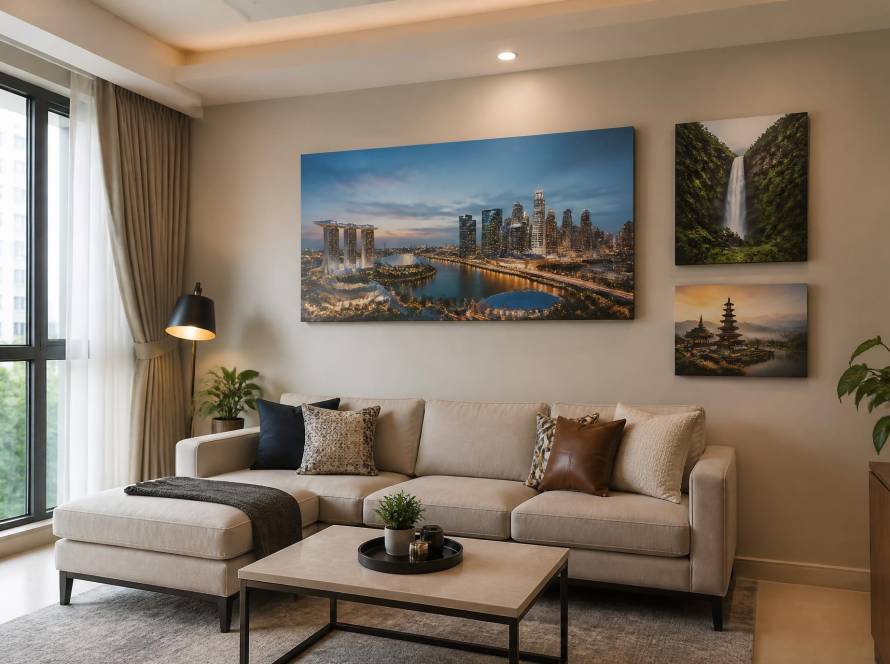
Planning a feature wall in a Singapore condominium usually starts with a simple question: what should this wall actually do? A feature wall can anchor a living room, define a dining zone, or give a compact bedroom a focal point. But before you commit to a layout, it helps to treat the decision as a verification exercise rather than a shopping spree. This guide covers how to choose and plan canvas wall art arrangements, what to check before you buy or install, and how to document your decisions so nothing is left to guesswork.
Start with the wall’s purpose, not the artwork
Walk through your home and identify which wall draws the eye first. In many condos, that is the wall facing the main seating area, the wall behind the dining table, or the wall you see when you enter a room. Once you have chosen the wall, define its job in one sentence. Examples: “This wall should make the living room feel calmer,” or “This wall should celebrate a family milestone.”
That sentence becomes your filter. If the goal is calm, you will likely favour fewer, larger pieces and restrained colour. If the goal is storytelling, a grouped arrangement may work better. Write the sentence down. It is the first item in your decision record.
Single statement canvas vs multi-panel arrangements
A single large canvas makes a clear, confident statement. It suits walls where you want one focal point and minimal visual competition. A multi-panel arrangement, by contrast, can fill a wider wall and create rhythm. Neither is inherently better; the choice depends on the wall’s proportions and how much visual energy the room can carry.
Before deciding, verify the practical constraints. Measure the wall width and height, note where furniture sits, and check whether doors, switches, or built-in features interrupt the wall. If you are considering custom dimensions, Canvas Craft offers custom canvas dimensions by quotation, and customers can enter preferred dimensions on the Order page. That is a useful starting point, but confirm any sizing details directly before you commit.
Grid, salon and linear arrangements: when to use each
Grid arrangements
A grid uses repeated shapes in aligned rows and columns. It reads as orderly and works well when the wall is regular and the furniture below is symmetrical. Grids suit homeowners who want a composed, gallery-like feel. The risk is rigidity: if the wall has awkward interruptions, a grid can highlight them.
Salon arrangements
A salon-style grouping mixes sizes and fills more of the wall. It suits walls where you want a collected, layered look. Because salon arrangements are visually busy, they tend to work best when the surrounding room is relatively quiet. Plan the outer boundary first, then work inward.
Linear arrangements
A linear arrangement runs horizontally or vertically. Horizontal lines can emphasise a wide wall; vertical lines can make a narrow wall feel taller. Linear layouts are easy to align and easy to adjust later, which makes them a practical choice for renters or anyone who may rearrange furniture.
Balance, alignment and tight condo spaces
In compact condos, balance matters more than symmetry. You can achieve balance by matching visual weight rather than exact sizes: a large piece on one side can be offset by two smaller pieces on the other. Alignment is the other key tool. Pick a consistent alignment line, such as the top edge or the centre line, and let the arrangement follow it.
Keep the relationship between artwork and furniture in mind. Artwork often feels most settled when it relates to the furniture below it rather than floating independently. Use paper templates or digital mock-ups to test this relationship before making any holes or commitments. For visual reference, the gallery shows how different arrangements can read on a wall.
Choosing complementary sizes and aspect ratios
Cohesion comes from repetition with variation. Repeating one shape creates calm; mixing two or three related shapes creates interest. If you mix aspect ratios, keep at least one element consistent, such as colour palette, frame style, or subject matter.
Before ordering, verify what sizes are available and how they are priced. The sizes and prices page is a good place to start, and for custom dimensions you can enter your preferred measurements on the Order page. Do not assume a size will work until you have checked it against your wall plan.
Integrating shelves and lighting
Shelves and lighting can support a canvas arrangement, but they also add visual weight. Treat them as part of the composition. If a shelf sits below the artwork, the artwork should relate to it rather than compete with it. Lighting can highlight texture and colour, but the right approach depends on your fixture and the artwork itself.
Because lighting and shelf integration involve electrical and property considerations, verify what is permitted in your building and what a qualified professional recommends. Do not rely on general advice for anything involving wiring, mounting, or wall modification.
Mock-ups and paper templates
Mock-ups are the cheapest way to avoid expensive mistakes. You can sketch arrangements on paper, use a design app, or cut paper templates to represent each canvas. Tape the templates to the wall and live with them for a few days. Check how they look from the main seating position, from the entry, and in different light.
As you plan, keep a simple record: wall dimensions, chosen layout, intended purpose, and any questions for your print provider or a qualified professional. If you are working with a provider, ask what information they need from you and what they can confirm in writing. Canvas Craft is a Singapore canvas printing business, and you can explore options through the FAQ or the about page.
Frequently asked questions
How do I choose between one large canvas and several smaller ones?
Start with the wall’s purpose and proportions. A single canvas suits a clear focal point; multiple canvases suit wider walls or a collected look. Test both with paper templates before deciding.
What should I verify before ordering a custom size?
Confirm the wall dimensions, the intended layout, and how the size will relate to nearby furniture. Canvas Craft offers custom canvas dimensions by quotation, and you can enter preferred dimensions on the Order page. Verify all details directly before committing.
Can I plan an arrangement without making holes in the wall?
Yes. Paper templates and digital mock-ups let you test layouts without any wall modification. For anything involving mounting or fixtures, check your building’s rules and consult a qualified professional.
How do I keep a multi-panel arrangement looking cohesive?
Repeat at least one element, such as colour, subject, or frame style, and keep alignment consistent. Balance visual weight rather than matching sizes exactly.
What should I ask a print provider before ordering?
Ask what information they need, what they can confirm in writing, and how custom dimensions are handled. Keep a record of your questions and their answers.