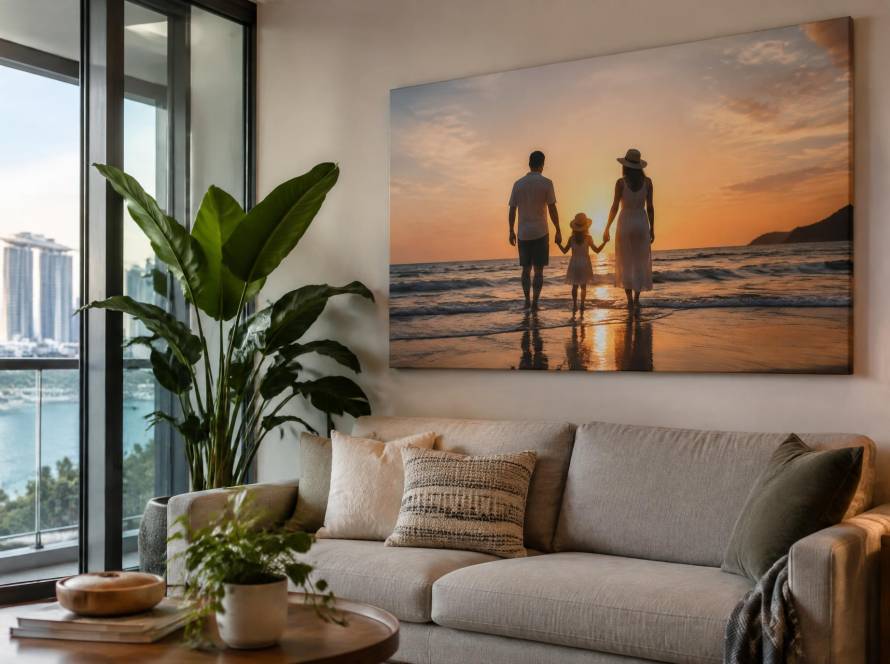
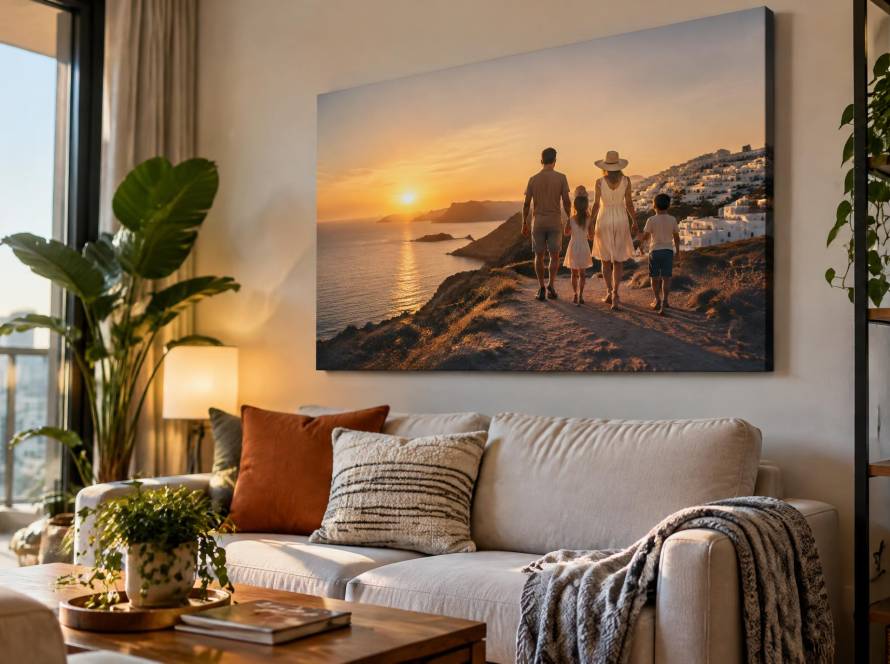
Turning a folder of travel photos into a wall display sounds simple until you start choosing images, sizes, and where everything will go. For Singapore families, the practical questions tend to arrive in a rush: which photos actually work on canvas, how do you keep a set looking cohesive, and what should you confirm with a print provider before you commit?
This guide is deliberately verification-first. Rather than offering care, cleaning, or climate advice that depends on specific materials and conditions, it walks through the decisions you can make confidently — narrative, image selection, composition, and the questions to ask before ordering. For anything related to long-term care, material behaviour, or placement in humid or sunlit areas, the right move is to check the maker’s documentation or ask a qualified professional rather than rely on general tips.
Start With a Story, Not a Shortlist
Most travel photo collections are organised by trip, which is useful for storage but not for display. A wall display works better when it follows a narrative thread. That could be a single journey, a recurring theme such as coastlines or markets, or a colour story drawn from the places you visited.
Before selecting images, write one sentence describing what the display should say. Examples: “Our family’s first trip to Japan, told through quiet moments.” Or “The colours of Southeast Asian markets.” That sentence becomes a filter. If an image does not support it, it belongs in an album rather than on the wall.
Questions to ask yourself
- Is this display about a place, a feeling, or a person?
- Will viewers see it as a set, or as unrelated pictures?
- Does the story need a clear beginning, middle, and end, or can it be a mood board?
Selecting Images That Scale Well
Not every photo that looks good on a phone will look good enlarged. The practical checks are about composition and clarity rather than technical specifications, which vary by provider and file.
- Strong focal points. A single subject — a doorway, a face, a boat — holds attention better than a busy scene.
- Simple backgrounds. Clutter that reads as charming on a small screen can become distracting when enlarged.
- Clear separation. Subjects that stand out from their surroundings tend to survive scaling better.
- Emotional weight. A slightly imperfect photo of a meaningful moment often works better than a technically sharp but forgettable one.
If you are unsure whether a file is suitable, ask the print provider what they need before ordering. Canvas Craft accepts custom dimensions by quotation, and customers can enter preferred dimensions on the Order page. That is a useful starting point for a conversation about what your specific images can support.
Building a Balanced Set: Sizes and Formats
A cohesive display usually has one dominant image supported by smaller companions, rather than several pieces competing for equal attention. Think in terms of hierarchy: one anchor, two or three supporting pieces, and optional small accents.
Formats matter too. A mix of landscape, portrait, and square can feel deliberate if the spacing and alignment are consistent. A uniform grid feels calmer and more formal. Neither is wrong — the choice depends on the room and the story.
Planning questions
- Which image is the anchor, and which are supporting?
- Do you want a formal grid or a more relaxed arrangement?
- Will the set be viewed up close, from across the room, or both?
You can browse existing work for composition ideas in the Canvas Craft gallery. Seeing how other sets are arranged can help you decide on hierarchy before you finalise your own selection.
Editing and Colour Consistency
When photos come from different trips, cameras, and lighting conditions, they can look mismatched even when each image is strong on its own. The goal of editing is not to make every photo identical, but to bring them into a shared visual language.
- Match warmth and coolness. If one image is noticeably warmer than the rest, adjust it slightly so the set feels related.
- Watch contrast. A single high-contrast image among softer ones can pull attention away from the anchor.
- Keep skin tones natural. If people appear in multiple images, consistency here matters more than stylistic colour choices.
- Edit as a set, not individually. View all selected images side by side before finalising.
If you are working with a print provider, ask whether they offer any guidance on file preparation or colour expectations. The Canvas Craft FAQ is a reasonable place to check what information is available before you order.
Placement: Thinking About the Room, Not the Rules
Placement decisions are easier when you start with how the room is used rather than with fixed rules. A living room display is often seen from a sofa, so sightlines and viewing distance matter. A corridor display is usually seen while walking, so rhythm and repetition can work well. A stairwell display is seen at an angle and in motion, which changes how much detail is legible.
Before deciding on a final arrangement, consider:
- Where people naturally pause or sit in the room.
- Whether the display will be seen straight-on or at an angle.
- How the set relates to existing furniture, lighting, and wall colour.
- Whether the arrangement should feel calm and ordered or lively and varied.
For anything involving fixing methods, wall types, or long-term placement in specific conditions, check the manufacturer’s guidance or consult a qualified professional. This article deliberately does not provide installation or material-care instructions, because those depend on details that should be verified for your specific product and home.
Framing vs Unframed: What to Decide
Framing and unframed canvas present differently, and the right choice depends on the room and the look you want. Rather than treating one as better, treat it as a design decision.
- Unframed canvas tends to read as more casual and contemporary, and can suit relaxed or informal spaces.
- Framed canvas can add a more finished, formal quality, and may help a set feel deliberate in a structured room.
- Consistency matters. Mixing framed and unframed pieces within one set can work, but it should be intentional rather than accidental.
If you are unsure which direction suits your space, ask the print provider what options are available and how they are typically used. Avoid assuming that any particular finish or framing choice has specific performance characteristics unless the provider confirms it in writing.
A Verification Checklist Before You Order
Before finalising a travel photo canvas display, work through these checks. They are designed to reduce surprises rather than to replace professional advice.
- Story check. Can you describe the display in one sentence?
- Image check. Does each photo have a clear focal point and enough clarity for the size you are considering?
- Set check. Do the images feel related in colour, contrast, and mood?
- Hierarchy check. Is there a clear anchor image and supporting pieces?
- Placement check. Have you considered viewing angle, distance, and how the room is used?
- Provider check. Have you confirmed what file information, dimensions, and options the print provider needs?
- Documentation check. For any care, material, or placement questions, have you checked the maker’s guidance or asked a qualified professional?
If you want to see how sizes and formats are typically presented, the sizes and prices page is a useful reference. Canvas Craft is a Singapore canvas printing business, and custom dimensions are available by quotation through the Order page.
Frequently Asked Questions
How do I choose which travel photos to turn into canvas prints?
Start with a single narrative or theme, then select images that support it. Look for clear focal points, simple backgrounds, and emotional relevance. If a photo does not fit the story, it can still live in an album.
Can I mix different sizes and formats in one display?
Yes, and many displays benefit from a clear hierarchy — one anchor image with smaller supporting pieces. Consistency in spacing and alignment helps a mixed set feel intentional rather than scattered.
Should I choose framed or unframed canvas?
That depends on the room and the look you want. Unframed canvas often reads as more casual, while framed canvas can feel more formal. Ask your print provider what options are available and how they are typically used.
What should I verify before ordering?
Confirm the file information, dimensions, and options your print provider needs. For any questions about long-term care, material behaviour, or placement in specific conditions, check the maker’s documentation or ask a qualified professional rather than relying on general advice.
Where can I see examples of canvas displays?
You can browse the Canvas Craft gallery for composition and arrangement ideas before finalising your own set.