Singapore’s tropical humidity can be tough on canvas prints. Over time, the edges may start to curl, especially on pieces displayed near windows or in rooms like the living area of an HDB flat or a condo balcony. The good news is that the right framing and mounting choices can make a real difference. This guide walks through the most effective options – from stretcher bars to coatings – so you can keep your canvas looking crisp for years.
Why Humidity Causes Edge Curling: A Quick Technical Overview
Canvas is a woven fabric stretched over a wooden frame. When humidity is high – Singapore averages around 84% relative humidity – the canvas fibres absorb moisture. The fabric expands, but the wooden stretcher bars stay relatively rigid. This creates internal tension that pulls the canvas away from the frame, especially at the corners and edges. The result? That annoying ripple or curl that makes a print look unfinished.
The problem is worse with thin stretcher bars, low-quality canvas, or poor tensioning. Understanding this mechanism helps you choose framing that counteracts the forces. The goal is to maintain even tension and prevent moisture from reaching the canvas from the back or sides.
Stretcher Bar Depths and Materials That Resist Warping
Thicker Bars for Better Stability
The first line of defence is the stretcher bar itself. Standard bars are often 1.5 cm deep, but for humid climates, consider bars at least 3.8 cm (1.5 inches) deep. Deeper bars provide more surface area for the canvas to grip, reducing the leverage that causes curling. They also add a substantial look that works well in larger spaces like a condo living room wall.
Kiln-Dried Wood vs. Pine
Not all wood is equal. Kiln-dried hardwood (like ramin or spruce) has lower moisture content and is less likely to warp when humidity fluctuates. Avoid untreated pine, which can twist over time. At Canvas Craft, for instance, all stretcher bars are kiln-dried to minimise movement – a detail worth asking about when ordering.
Cross-Bracing for Large Prints
For canvases wider than 60 cm, internal cross-bracing (a horizontal or vertical bar inside the frame) adds rigidity. This prevents the frame itself from bowing, which is a hidden cause of edge curling.
Floating Frames, Rabbet Frames and Gallery Wraps Compared
Gallery Wrap: The Humidity-Friendly Baseline
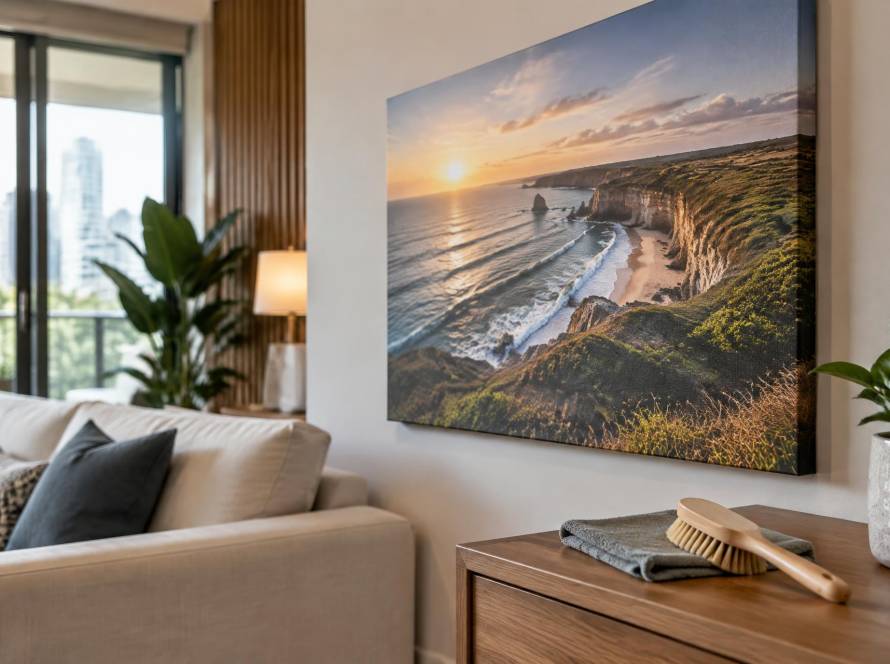
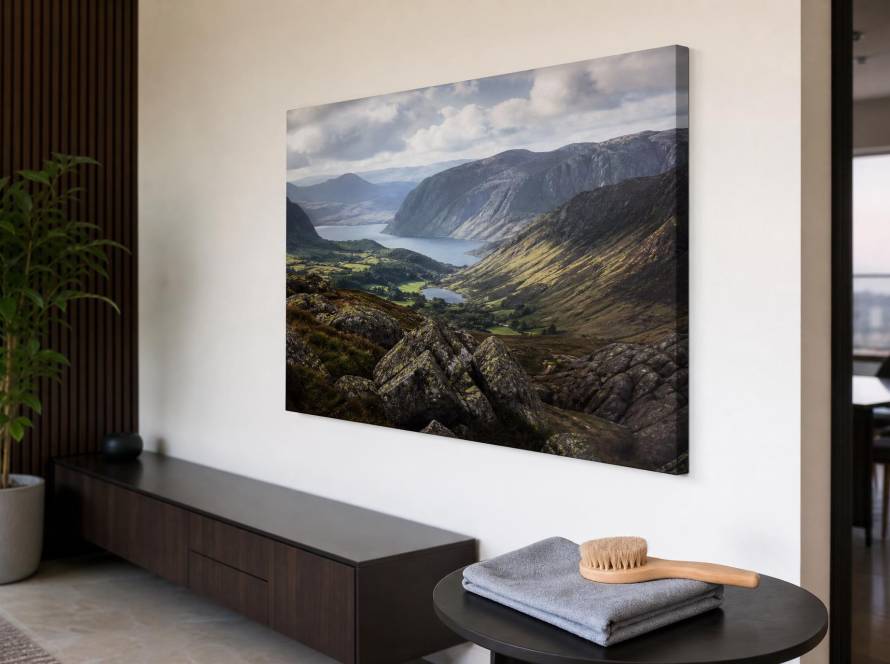
A gallery wrap means the canvas wraps around the sides of the stretcher bar and is stapled on the back. This eliminates the need for an external frame and creates a clean, modern look. Because the canvas is taut on all sides, a well-made gallery wrap naturally resists curling – provided the stretcher bar is deep and the tension is even. For HDB flats where minimalist style is popular, gallery wraps are a solid choice. Just ensure the staples are on the back, not the sides, to avoid corrosion from humidity.
Floating Frames: A Protective Gap
Floating frames create a small gap between the canvas and the frame, allowing air to circulate. This reduces moisture trapping behind the canvas, which is a common cause of curling in Singapore’s weather. They work especially well for canvases with coloured or printed edges (where the image continues onto the sides). The gap also prevents the frame from pressing on the canvas edges, which can cause distortion.
Rabbet Frames (Standard Picture Frames)
Rabbet frames hold the canvas inside a recess. While they offer a traditional look, they can trap humidity against the back of the canvas if there’s no breathing space. If you prefer this style, choose a frame with a deeper rabbet (at least 2 cm) and add a moisture barrier behind the canvas. For small-format prints given as gifts, this is often acceptable, but for larger pieces in humid rooms, floating frames or gallery wraps are safer.
Backings and Tensioning Methods to Stabilise Canvas
Sealing the Back
Adding a dust cover – a thin sheet of paper or plastic – on the back of the frame helps block moisture from entering through the rear. In Singapore, a breathable backing (like acid-free paper) is better than a completely sealed plastic one because it prevents condensation inside the frame. Avoid using cardboard, as it can attract mould.
Tensioning Keys
Most quality stretcher bars come with small wooden wedges (keys) that you can tap into the corners after stretching. These expand the frame slightly, tightening the canvas. Over time, as humidity cycles cause slight loosening, you can re-tension the canvas by gently tapping the keys. This is a simple maintenance step that extends the life of your print significantly.
Recommended Coatings and Treatments Before Framing
UV and Moisture Protective Spray
Before framing, consider applying a clear, matte acrylic coating to the canvas surface. This adds a thin barrier that slows moisture absorption and protects against UV fading – important for prints displayed in a sunlit living room. Look for archival-quality sprays designed for fine art. Test on a small corner first to ensure the colours don’t shift.
Edge Sealing
Some framers apply a liquid sealant along the edges of the canvas where it meets the stretcher bars. This prevents moisture from wicking into the fibres from the sides. It’s a small step that can make a noticeable difference in a humid environment like Singapore.
Installation Best Practices to Maintain Tension Over Time
Choose the Right Wall
Avoid hanging canvas prints on walls that are prone to condensation, such as those next to air-conditioning vents, bathrooms, or kitchen counters. In a typical HDB flat, the living room wall that faces an external window is usually fine, but check for dampness. Use a wall anchor appropriate for the weight of the framed canvas – a loose hanging can cause the frame to tilt and stress the canvas.
Keep Away from Direct AC Airflow
While air-conditioning reduces overall humidity, placing a canvas directly under the AC unit can cause rapid temperature changes, leading to repeated expansion and contraction. A gap of at least 1 meter from the airflow is recommended.
Rotate and Inspect
Every few months, gently run your hand over the back of the canvas to check for slackness. If you feel any looseness, use the tensioning keys mentioned earlier. Also look at the edges from the side – any lifting is a cue to adjust. Catching it early prevents permanent creasing.
When to Seek Professional Re-Stretching or Reframing
If your canvas has been curling for months and the tensioning keys don’t help, it may need professional re-stretching. This involves removing the canvas, cleaning the back, and re-mounting it onto new stretcher bars. It’s a service offered by many custom framing shops. For prints from Canvas Craft, you can also check their support page or contact them directly about re-stretching options.
Reframing is worth considering if the current frame has warped or if you want to upgrade to a floating frame for better humidity performance. Don’t wait until the curl becomes a permanent fold – once the canvas takes a set, it’s much harder to fix.
Frequently Asked Questions
How long does a canvas print last in Singapore’s humidity with proper framing?
With good framing (deep stretcher bars, sealant, and a quality coating), a canvas print can easily last 10 years or more in a typical air-conditioned Singapore home. Direct sunlight and extreme humidity can shorten that, but proper care makes a big difference.
Can I use a regular IKEA frame for my canvas print?
IKEA frames are usually designed for paper prints, not stretched canvas. They have shallow rabbets that press against the canvas, causing distortion. It’s better to use a purpose-built canvas frame or a floating frame.
What size stretcher bar depth is best for large canvases (1m and above)?
For canvases over 1 meter, a depth of at least 4.5 cm is recommended, plus cross-bracing. This prevents the frame from twisting under the canvas tension.
Does a floating frame prevent curling better than a gallery wrap?
Both can be effective. The key is proper construction. A quality gallery wrap with deep bars is excellent; a floating frame adds extra protection by allowing airflow. If you have both options, choose based on your decor style.
How often should I check my canvas print for signs of curling?
A quick visual check every 3-6 months is enough. If you notice the edges starting to lift, tap the tensioning keys or consult a professional. Regular inspection is especially important during the monsoon season when humidity peaks.