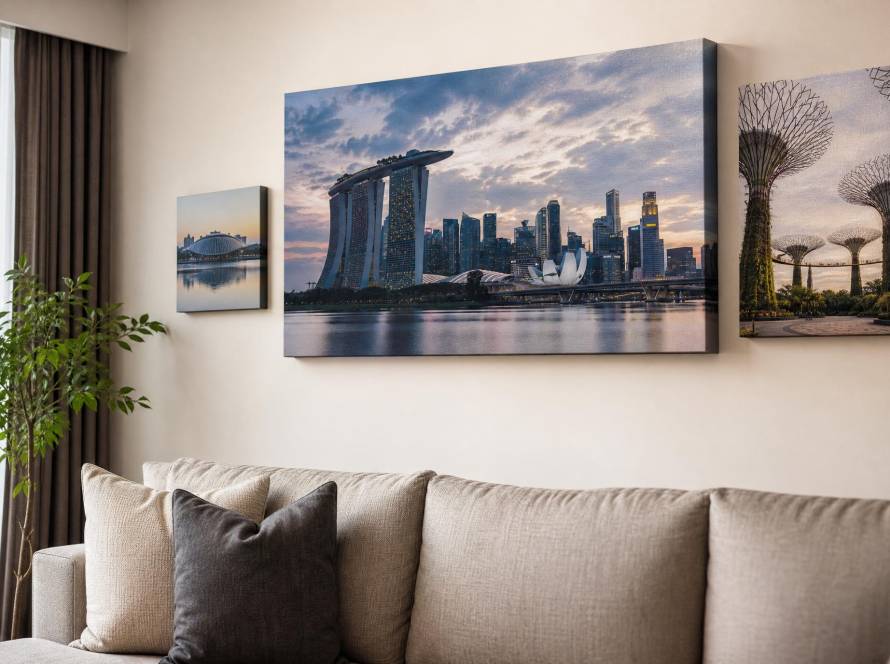
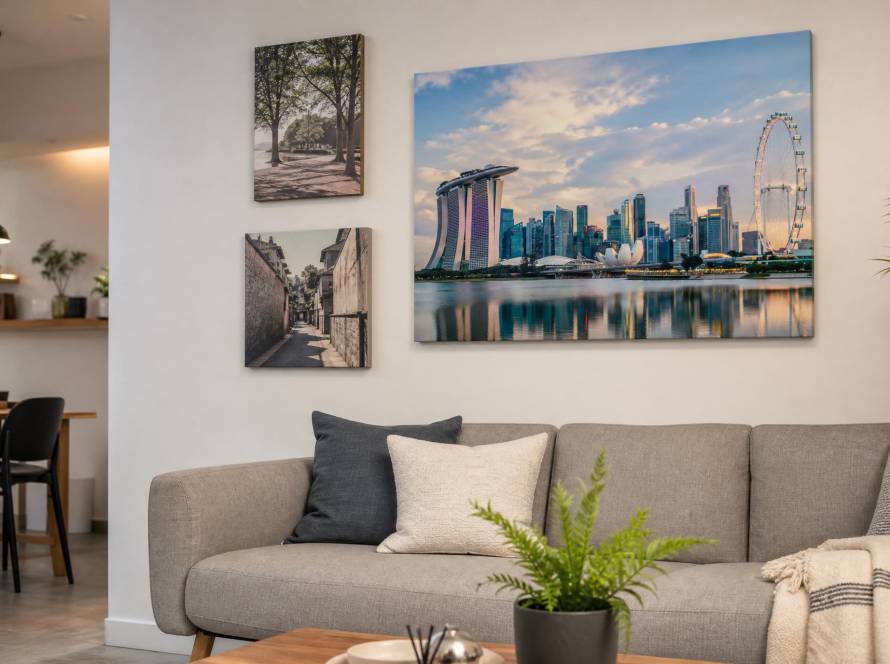
Selecting the right canvas print size for an HDB living room can feel like a guessing game. A print that looks perfect in the shop may overwhelm a small wall or get lost on a large one. This guide walks through practical considerations—wall dimensions, viewing distance, composition, and arrangement—so you can choose a size that fits your space and looks intentional.
Assessing Available Wall Space in HDB Living Rooms
HDB living rooms vary in size, but most fall within a compact to mid-range footprint. Before choosing a canvas size, measure the wall where you plan to hang the print. A common rule is that the artwork should occupy about two-thirds to three-quarters of the width of the furniture below it (such as a sofa or console). For example, if your sofa is 240 cm wide, a canvas print around 160–180 cm wide would be proportionate.
Also consider the ceiling height. Standard HDB ceilings are around 2.6 to 2.8 metres. A tall vertical canvas can draw the eye upward and make the room feel larger, but avoid going too close to the ceiling—leave at least 15–20 cm of breathing room above the print.
How Viewing Distance Affects Ideal Canvas Print Size
The distance from which you typically view the print matters more than you might think. In an HDB living room, the main seating area is often 2 to 3 metres from the wall. For that distance, a canvas print should have a minimum height of about 40–50 cm to be easily appreciated. Larger prints (60 cm and above) work well for distances of 3 metres or more.
If the print will be seen from a dining area or entryway, factor in those sightlines too. A single large canvas can serve as a focal point visible from multiple angles, while smaller prints may need to be grouped to have similar visual impact.
Standard Composition Ratios and When to Crop
Canvas prints come in various aspect ratios. Common options include:
- Square (1:1) – Works well for portraits, close-ups, and symmetrical compositions.
- Standard landscape (3:2 or 4:3) – Versatile for most photos, from travel shots to family portraits.
- Panoramic (16:9 or wider) – Ideal for landscapes or cityscapes, but requires enough wall width to avoid looking cramped.
When cropping, keep the main subject away from the edges to avoid awkward cuts. If your photo has important elements near the borders, consider a custom size that preserves the original composition rather than forcing a standard ratio.
Single Large Print vs Multi-Panel Arrangements
Both approaches have their place in HDB living rooms. A single large canvas creates a bold statement and works well above a sofa or TV console. Multi-panel arrangements (diptychs, triptychs, or grids) offer flexibility—you can cover a wider area without a single oversized piece, and the gaps between panels add a modern gallery feel.
For multi-panel sets, maintain consistent spacing (usually 3–5 cm between panels) and align the overall width with the furniture below. A triptych, for instance, can span 180 cm with each panel around 55 cm wide, leaving small gaps.
Placement Tips for Above Sofas and TV Units
Above a sofa, the bottom edge of the canvas should sit about 15–25 cm above the backrest. This keeps the artwork within comfortable eye level when seated. For TV units, avoid placing a canvas directly above the screen if it competes for attention. Instead, offset the print to one side or use a smaller piece that complements the TV without clashing.
In open-concept HDB layouts, consider how the canvas aligns with adjacent walls and doorways. A print that looks centred from the sofa may appear off-centre from the dining area. Walk around the room to check sightlines before finalising placement.
Considering Frames, Margins, and Visual Breathing Room
Frames add thickness and visual weight. A chunky frame can make a canvas feel more substantial, but it also reduces the visible image area. If your wall is narrow, opt for a slim frame or a frameless gallery wrap to maximise the print surface.
Margins around the artwork—both from the edges of the wall and from nearby furniture—are equally important. Aim for at least 10–15 cm of empty wall space on each side of a single canvas. For grouped arrangements, treat the entire cluster as one visual unit and apply the same margin rule.
Mock-Up Methods: Paper Templates and Digital Previews
Before committing to a size, try these low-cost mock-up techniques:
- Paper templates – Cut newspaper or kraft paper to the exact dimensions of the proposed canvas and tape it to the wall. Live with it for a day or two to see how it feels.
- Digital previews – Use a photo editing app or a room visualiser tool to overlay a scaled image of the canvas onto a photo of your living room. This helps you compare different sizes without any physical effort.
- Measure with painter’s tape – Mark the outline of the canvas on the wall with low-tack tape. This is quick and easy to adjust.
These methods cost nothing but can save you from ordering a size that doesn’t suit your space.
Sizing Checklist Before Ordering
Use this checklist to confirm your choice before placing an order:
- Measured wall width and height, including clearance from ceiling and floor.
- Checked viewing distance from main seating and other angles.
- Selected an aspect ratio that matches your photo composition.
- Decided on single print or multi-panel arrangement.
- Accounted for frame thickness and margins.
- Done a mock-up (paper, tape, or digital) to verify scale.
If you are still unsure, browse the Canvas Craft gallery for inspiration on how different sizes look in real HDB settings. You can also refer to the sizes and prices page to see available options and dimensions.
Frequently Asked Questions
What is the best canvas size for a 2.6-metre HDB living room wall?
A canvas around 100–120 cm wide works well for a wall of that width, leaving enough breathing room on both sides. If you prefer a larger statement piece, consider a 140 cm wide canvas, but ensure it does not crowd adjacent furniture.
Should I choose a framed or frameless canvas for a small living room?
Frameless gallery-wrap canvases are a good choice for small spaces because they appear lighter and take up less visual room. Frames add bulk and can make a small wall feel even tighter.
Can I mix different canvas sizes in one arrangement?
Yes, but keep a consistent theme—such as same frame style or colour palette—to maintain cohesion. A grid layout with uniform spacing works best when sizes are multiples of each other (e.g., 40×40 cm and 80×80 cm).
How high should I hang a canvas above a sofa?
Typically 15–25 cm above the backrest. This keeps the artwork at eye level when seated and prevents it from feeling disconnected from the furniture.
For more guidance, visit the Canvas Craft FAQ page or explore the gallery to see real examples of canvas prints in Singapore homes.