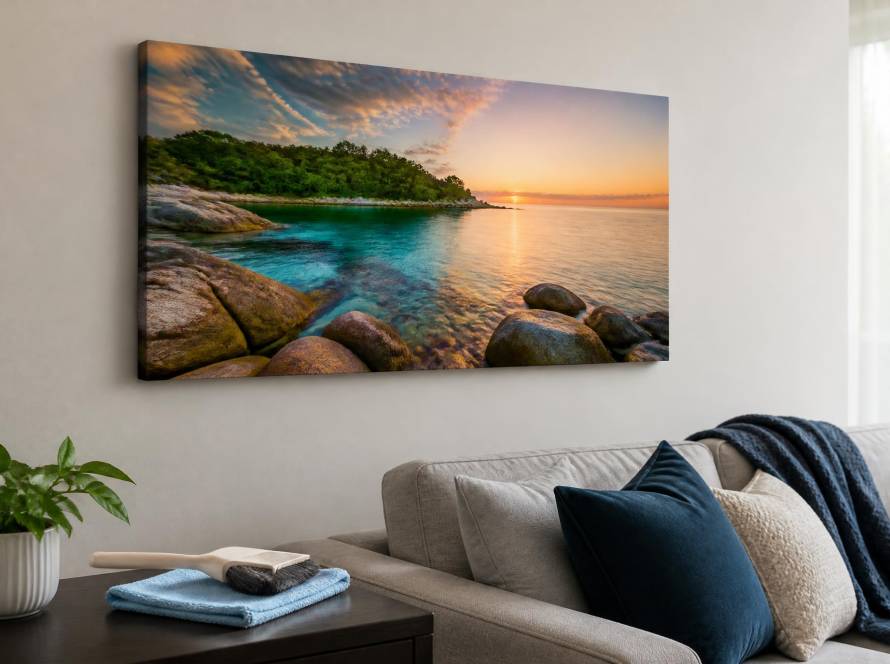
If you’ve invested in a canvas print, you want it to last. In Singapore’s climate—where humidity often hovers above 80% and strong sunlight streams through HDB windows—the right protective coating can make a real difference. This guide walks you through the types of varnishes and coatings available, their visual effects, and practical considerations for your home.
Why protective coatings matter for canvas longevity
Canvas prints are typically made from cotton or polyester fabric stretched over a wooden frame. Without a protective layer, the surface is vulnerable to dust, moisture, and UV rays. Over time, uncoated prints can yellow, fade, or develop mould—especially in the humid conditions common in Singapore’s HDB flats, BTO units, and condominiums.
A varnish or coating acts as a barrier. It seals the ink and fabric, reducing the rate of colour shift and making the print easier to clean. For a piece that is meant to hang for years—whether it’s a family portrait, a holiday photo, or a commissioned artwork—choosing a suitable coating is a practical step toward preserving it.
Matte, satin and gloss: visual effects and trade-offs
The finish of a coating changes how the image looks under different lighting.
Matte reduces glare, which is useful if the print is placed opposite a window or under track lighting. It gives a soft, almost painterly look. However, matte can make dark areas appear slightly less deep because it scatters light.
Gloss enhances colour saturation and contrast, making blacks and bright colours pop. The trade-off is visible reflections and fingerprints. In a living room with afternoon sun, a glossy print may be hard to view from certain angles.
Satin is a middle ground. It offers a subtle sheen without the harsh reflections of gloss, and it retains more colour depth than matte. For most Singapore homes, satin is a versatile choice that works well in both naturally lit and artificially lit spaces.
If you’re unsure which look suits your interior, browse our gallery to see examples of different finishes on real prints.
UV-protective finishes and their real-world benefits
Ultraviolet light from the sun accelerates fading. A UV-protective coating adds a layer that absorbs or reflects UV rays before they reach the ink. In Singapore, where UV index is consistently high, this is especially relevant for prints hung near windows or in rooms with strong daylight.
It is important to note that UV coatings do not stop fading entirely—they slow it down. The level of protection depends on the coating’s formulation and thickness. For a print that will be in direct sunlight for several hours a day, pairing UV coating with a UV-filtering window film is more effective than relying on the coating alone.
Canvas Craft uses UV-stable inks and can apply a UV-protective varnish upon request. Our team can advise on the appropriate level of protection based on where you plan to hang the print.
Breathable vs sealed coatings for humidity control
Humidity is a major concern in Singapore. If moisture gets trapped between the canvas and a non-breathable coating, it can lead to bubbling or delamination. Breathable coatings allow water vapour to escape, reducing the risk of damage.
Sealed coatings, on the other hand, create a hard, impermeable layer. They are more effective at blocking dust and liquid spills, but they may not be ideal for very humid environments unless the canvas is thoroughly dried before application. For a print in a bathroom or kitchen—where steam is common—a sealed coating can be useful, but ensure the canvas has been properly conditioned.
For most living areas in an HDB or condo, a breathable satin or matte varnish is sufficient. It protects the surface while allowing the canvas to adjust to gradual humidity changes.
Application methods: spray, brush and factory coating differences
How a coating is applied affects its uniformity and durability.
Spray varnishes are easy to apply at home, but they require careful technique to avoid drips or uneven coverage. Multiple thin coats are better than one thick coat. Aerosol sprays also release fumes, so good ventilation is necessary.
Brush-on varnishes give more control over thickness, but brush marks can show if not applied evenly. They are less messy than sprays but take longer to dry between coats.
Factory coating is applied by professionals using equipment that ensures consistent thickness and adhesion. This is the method used at Canvas Craft. It eliminates the risk of streaks, bubbles, or dust trapped in the finish. While it costs more upfront, it often results in a longer-lasting, more even protective layer.
If you are coating a canvas yourself, test the product on a small corner first. For a high-value print, professional coating is usually the safer choice.
When to recoat and how to assess coating degradation
Over time, coatings can wear down. Signs of degradation include a loss of sheen, visible scratches, or a tacky feel. In Singapore’s humidity, coatings may also develop a slight haze if moisture gets trapped.
As a general guideline, inspect your canvas print every 12 to 18 months. If the surface feels rough or looks duller than when new, it may be time to apply a fresh coat. For prints in high-traffic areas or near kitchens, check more frequently.
Recoating requires cleaning the surface gently with a dry microfiber cloth to remove dust, then applying a thin, even layer of the same type of varnish. Always follow the manufacturer’s drying time between coats.
Safety and ventilation considerations during application
Varnishes contain solvents that can be irritating to breathe. If you are applying a coating yourself, work in a well-ventilated space—open windows and use a fan to direct fumes outside. Wear a mask rated for organic vapours, and keep the area away from children and pets.
Water-based varnishes have lower volatile organic compound (VOC) levels than solvent-based ones. They are safer for indoor use and dry faster, though they may not be as durable in high-humidity conditions. For a DIY project in a small HDB room, water-based is a sensible option.
If you are ordering a custom print, the coating is applied before delivery, so you don’t need to worry about fumes. At Canvas Craft, we use low-VOC varnishes that meet safety standards.
Frequently Asked Questions
Can I apply varnish to a canvas print myself?
Yes, but it requires care. Spray varnishes are easier for beginners, but factory coating by a professional service like Canvas Craft gives a more consistent result.
How often should I recoat a canvas print?
Every 12 to 18 months, depending on exposure to humidity, dust, and sunlight. Inspect the surface regularly for signs of wear.
Is matte better than gloss for Singapore’s climate?
Neither is universally better. Matte hides glare well, while gloss offers richer colours. Satin is a good compromise. Consider the room’s lighting and your personal preference.
Does a UV coating protect against heat?
No. UV coatings only reduce fading from ultraviolet light. They do not stop heat-related expansion or colour shift. Keep prints away from direct heat sources.
What is the best coating for a canvas photo gift?
For a gift that will be displayed in a typical Singapore living room, a satin UV-protective coating is a safe choice. It resists glare, offers moderate colour enhancement, and extends the print’s life.