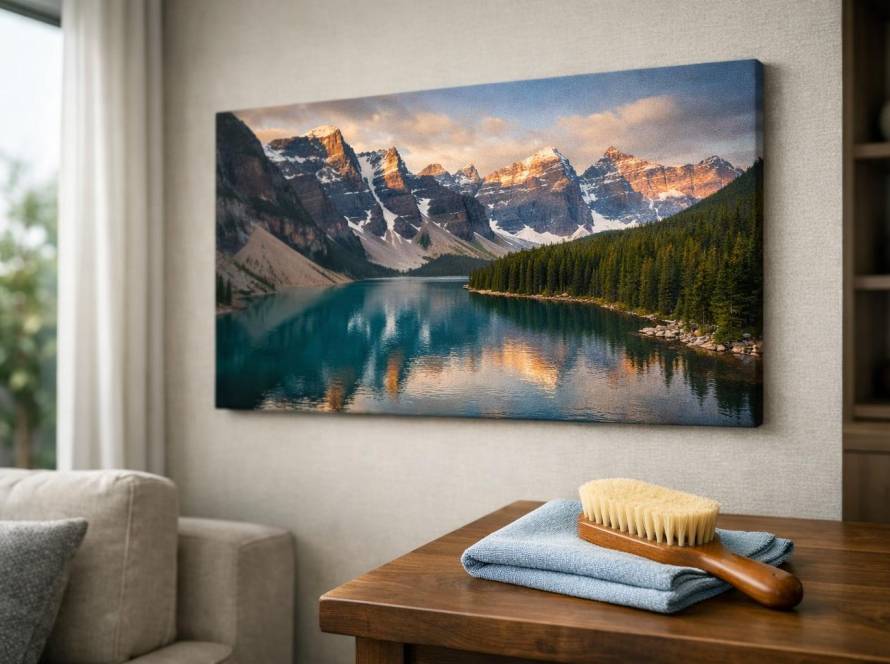
You have a canvas print you love, and you want it to look good for as long as possible. That instinct is right. But when it comes to canvas wall art protection tips, most of the advice circulating online assumes a set of facts about materials, climate and product behaviour that you cannot actually confirm for your specific piece. This article takes a different approach: instead of giving you generic care instructions, it helps you verify what applies to your canvas, your home and your situation before you act.
The original topic of this article was protecting canvas prints from Singapore humidity and sunlight. Rather than repeat unverified claims about how canvas behaves in heat, moisture or light, we will focus on the questions you should ask, the information you should look for, and the records you should keep. This is a verification-first decision framework, not a cleaning or maintenance guide.
Why This Article Does Not Give You Cleaning or Protection Steps
Care advice for canvas prints is only as reliable as the source behind it. The manufacturer or maker who produced your canvas knows what materials were used, how it was finished and what they recommend. Anyone else, including a general article, is guessing unless they can point to verified documentation for that specific product.
Because of this, we will not tell you which substances are safe, which rooms are dangerous, or how long a print will last in a given condition. Those answers belong to the maker of your print, not to a generic guide. What we can do is help you ask the right questions and build a simple record of your artwork’s condition and history.
If you are commissioning a new canvas, whether from Canvas Craft or another provider, this verification mindset starts at the point of purchase and continues throughout ownership. You can see examples of different canvas styles and subjects in the Canvas Craft gallery.
What to Verify Before You Act on Any Protection Advice
1. Identify What You Actually Own
Before you can protect a canvas print, you need to know exactly what it is. Write down whatever you can find out:
- Who made the print, and when
- What materials the maker lists (canvas type, ink type, any stated finish)
- Whether it came with any care or handling documentation
- Where and how it has been displayed so far
- Any visible changes you have noticed, such as colour shifts, surface changes, or changes at the edges
If you bought the print from a gallery, a print studio or an artist, check whether they provided any written guidance. If you bought it secondhand or received it as a gift, you may not have this information. In that case, note that the material details are unknown, rather than assuming them.
2. Find the Maker’s Documentation, Not General Advice
The single most useful source is the documentation that came with your canvas or is published by the maker. Look for:
- Any stated care, handling or display guidance from the maker
- Any stated limitations on where the canvas should be placed
- Any specified conditions the maker says to avoid
- Contact details for the maker if you have follow-up questions
If you cannot find this documentation, contact the maker directly. A short email asking ‘what do you recommend for this specific product and how do you know?’ is far more useful than applying a general rule from a blog post.
3. Ask the Right Questions Before Changing Anything
Whether you are asking a print provider, a framer or a conservator, the quality of the answer depends on the quality of the question. Try these:
- What do you know about this specific material and finish?
- Is your advice based on the maker’s documentation, or on general practice?
- What could go wrong if I do nothing at all?
- What could go wrong if I try a protective measure and it is not suitable?
- Can you point me to written guidance I can keep for reference?
Be cautious with anyone who gives confident answers without asking what you own. A responsible adviser will want to know the specific product before making recommendations.
4. Document the Current Condition
Before you make any changes, record how the canvas looks now. This gives you a baseline to compare against later, and it helps if you ever need to make a claim or seek professional advice.
- Take clear photographs in daylight, from straight on and from the sides
- Note the date of the photographs
- Write a short description of the surface, colours and edges as they appear today
- Keep this record somewhere you can find it again
You do not need special equipment. A phone camera and a note are enough to create a useful record.
Placement: Questions to Ask Instead of Rules to Follow
Placement is often framed as a simple matter of avoiding certain rooms or certain walls. In practice, it depends on the specific canvas, the specific space and the specific conditions. Rather than giving you rules, here are decision factors to discuss with the maker or a qualified adviser.
Visual and Practical Considerations
Think about how the canvas will be seen and what it will be near. These are not protection rules, but practical questions that affect whether you will enjoy the piece and whether you can monitor it easily:
- Will you see it every day, so you notice any change early?
- Is it in a spot where it could be knocked, touched or brushed against often?
- Is it near a source of heat, steam or strong light that the maker specifically warned about?
- Is it displayed in a way that matches the maker’s stated guidance?
If you are unsure, ask the maker whether your intended location is suitable for that specific product. Do not assume that a location is safe or unsafe based on general advice.
Checking Manufacturer or Professional Guidance
Every canvas is different. A piece made with one set of materials and finishes may have different recommendations from another. The maker’s guidance, or advice from a qualified conservator who has examined the piece, is the only reliable basis for a placement decision.
If you are planning a larger installation or a display for a space like an office, community area or shop, it is worth asking the maker or a professional about the specific conditions of that space. You can also explore Canvas Craft’s FAQ for general information about ordering and sizing.
When to Reconsider, Relocate or Replace
There is no universal schedule for when a canvas needs attention. Instead, use your documented baseline and your maker’s guidance to decide when to seek advice.
Consider reaching out to the maker or a qualified professional if you notice:
- Changes in colour, surface texture or appearance that concern you
- Changes at the edges, corners or mounting points
- Any odour, staining or surface change that appears new
- A change in the space around the canvas that the maker might consider relevant
Do not attempt to treat or clean the canvas based on internet advice. Instead, describe what you see, share your photographs, and ask the maker or a conservator what they recommend for that specific situation. If the canvas is valuable or sentimental, a professional opinion is worth seeking before you do anything.
Relocation is a decision to discuss with the maker or a professional, not a rule to apply blindly. If the maker says a location is unsuitable, follow their guidance. If you are unsure, ask before moving the piece.
Frequently Asked Questions
How can I tell if my canvas print is being damaged?
Look for changes from your documented baseline: colour shifts, surface changes, edge changes or anything that appears new. If you notice something, contact the maker or a qualified conservator with your photographs and description. Do not try to fix it yourself based on general advice.
Should I move my canvas if it is near a window or a damp area?
That depends on the specific canvas and the maker’s guidance. Ask the maker whether your location is suitable for that product. Do not assume that any particular location is safe or unsafe without checking.
Can I clean my canvas print myself?
Only follow cleaning guidance provided by the maker for that specific product. If you do not have that guidance, ask the maker before doing anything. General cleaning advice from the internet may not be suitable for your canvas.
Where can I find more information about ordering a canvas print?
You can explore the Canvas Craft sizes and prices page for general information. Canvas Craft is a Singapore canvas printing business, and customers can enter preferred dimensions on the Order page for a custom quote.
How do I document my canvas print’s condition?
Take dated photographs in daylight, from straight on and from the sides. Write a short description of the surface, colours and edges as they appear now. Keep this record somewhere safe so you can compare it later.
Building a Verification Habit
The most useful thing you can do for your canvas print is not to apply a generic care routine, but to build a habit of verification. Know what you own, keep the maker’s documentation, ask specific questions, and document changes as they appear. This approach works whether you own one canvas or several, and whether you are keeping a piece for yourself or choosing one as a gift.
If you are considering a new canvas, you can browse the Canvas Craft gallery for inspiration. Whatever you choose, start as you mean to continue: ask the maker what they recommend, and keep a record. That is the most reliable protection you can give your artwork.